
How much does an exoskeleton cost in 2026? From $689 for an entry-level consumer hip model to tens of thousands of dollars for a prescribed medical exoskeleton. Between the two, each use has its own price range, and that range is what counts: comparing the price of a work exoskeleton with a hiking model makes no sense.
Here are the real prices, type by type. Consumer prices come from each brand’s US store and were checked on Oct 1, 2026:
How Much Does a Hiking or Walking Exoskeleton Cost?
This is the only segment where an individual buys online at a posted price, like any other piece of sports gear. The 2026 range is $689 to $2,299, in three clear tiers:
| Tier | Price (checked Oct 1, 2026) | Models |
|---|---|---|
| Entry | $689 to $999 | Dnsys X1 ($689 for the Lite, $889 for the Carbon), Hypershell X Carbon and X Pro S ($999 each) |
| Core | $1,199 to $1,499 | AstroShell Alpha 1 ($1,199), Dnsys X1 Carbon Pro ($1,289), Ascentiz H Pro ($1,299), Hypershell X Ultra ($1,399), X Max S ($1,499) |
| Premium | $1,699 to $2,299 | Ascentiz H Ultra ($1,699), Hypershell X Ultra S ($1,999), Hypershell Halo ($2,299 preorder, the only hip and knee model we compare) |
Prices are indicative and tracked in our comparison of the best exoskeletons. Shipping is part of the picture too: Hypershell ships free from a US warehouse (about 8 business days, contiguous US), Dnsys ships from Los Angeles in 3 to 7 business days, and Ascentiz ships from a US warehouse in 2 to 7 business days.
Two older Hypershell models, the X Pro and the X Go, were not available in the US store on Oct 1, 2026, so we leave them out of every range on this page.
How Much Does a Leg or Knee Exoskeleton Cost?
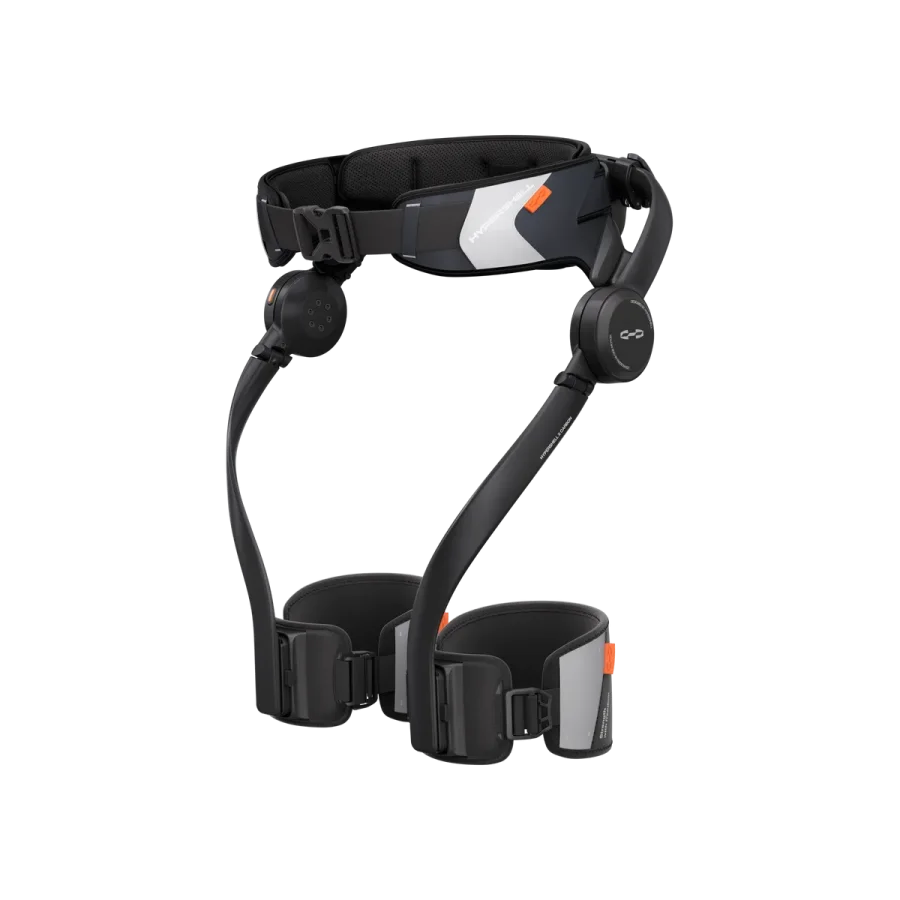
Two serious products cover this need in 2026, and their prices frame the segment: the Dnsys Z1, built for the knee, at $1,299 ($1,999 for the Z1 Pro with two batteries), and the Hypershell Halo, which motorizes the hip AND the knee, at $2,299 (preorder, ships late November 2026). Prices checked Oct 1, 2026.
Watch out for look-alikes: many of the “knee exoskeletons” sold for a fraction of that price on marketplaces are passive braces, with no motor and no sensors. They can be useful, but they are not the same product. And if knee pain is why you are shopping, see a doctor or physical therapist first. We rank leg-assist models next to hip models in our walking exoskeleton ranking.
How Much Does a Work Exoskeleton Cost (Lifting, Construction, Heavy Loads)?
Here the market works differently. Work exoskeletons are sold mostly to employers, often through a quote, a demo and training. Public prices are rare. As a general rule, expect several thousand dollars per unit, with the exact price confirmed only when you ask the maker or a dealer.
We do not compare work models on this page, so this section carries no product links. Three reading rules for a business buyer:
- Passive usually costs less than active: a system of springs and textile has no motor or battery to pay for.
- The unit price is not the real cost: add team training, upkeep and the real adoption rate. An exoskeleton left in the locker room helps nobody.
- Ask before you buy: your safety manager and your insurer may have requirements for equipment and training, so check with them first.
How Much Does a Medical Exoskeleton Cost (and What About Disability)?
Medical exoskeletons, used in rehabilitation or to help people with paralysis stand and walk, are a different category: regulated medical devices, prescribed by clinicians, costing tens of thousands of dollars. In the US they are regulated by the Food and Drug Administration (FDA). They are bought mostly by rehabilitation centers and health systems, not by shoppers.
If this applies to you or to someone you care for, keep three things in mind:
- The path starts with a medical team, not a store: a physician (such as a physical medicine and rehabilitation doctor) and a physical therapist decide whether a device fits your situation.
- Many people first meet these devices in a rehabilitation setting, working with a therapist, not at home on their own.
- Coverage rules are specific: Medicare has created a payment for one category of personal exoskeleton, and private insurers set their own rules. Ask your care team and your insurer what applies to you before you spend anything.
We place no commercial link in this section. The consumer models in the rest of this guide are recreation products, not medical devices.
How Much Does a Military Exoskeleton Cost?
Common question, short answer: there is no price, because there is no market. Military exoskeletons are research and development programs funded by governments, not products on sale. The figures that circulate are program budgets, not price tags. If the technology is what interests you, the closest thing you can actually buy is the work category above.
What Really Changes the Price of an Exoskeleton
Within the consumer range, four things explain most of the gap between one price and the next (US store prices checked Oct 1, 2026):
- How many joints are motorized: the hip alone (X Carbon, $999) against hip and knee (Halo, $2,299). Each joint adds motors, sensors and software.
- Power and software: peak power runs from 800 W (watts) on the X Carbon to 1,000 W on the X Ultra, plus the app and the algorithms that read your stride.
- Batteries in the box: the X Ultra ($1,399) ships with two 30 km (18.6 mi) batteries, the X Max S ($1,499) with one. The same kind of gap separates the X Carbon (two batteries) from the X Pro S (one) at the same $999.
- Certification: a certified medical device costs orders of magnitude more than a recreation product, and rightly so: clinical studies, standards and traceability.
One caution: a higher price does not always buy more. The X Ultra S costs $600 more than the X Ultra ($1,999 against $1,399) with the same 1,000 W peak power and 60 km (37.3 mi) of range in the box, according to the spec sheets. Compare specs, not model names.
The True Total Cost: What the Sticker Price Leaves Out
The purchase price is not the cost of owning one. On a consumer model, also budget for these (details as of Oct 1, 2026):
- Batteries: check how many come in the box. At $999, the X Carbon includes two and the X Pro S one, so a spare battery bought later is an extra cost. Compare the price of the full kit, not the headline price.
- Comfort parts: replacement pads, straps and a carry bag can cost extra. Check the brand’s accessory list before you pay.
- Taxes and delivery: the total at checkout can differ from the listed price, especially outside the contiguous US. Confirm it before you pay.
- Generation depreciation: the market brings out a new generation about once a year (Hypershell’s S series and the Halo both arrived in 2026). A model bought just before a launch loses appeal within weeks; right after one, the previous generation is worth a look.
Exoskeleton price: your questions
How much does an exoskeleton cost?
It depends on the use. A consumer hip exoskeleton for hiking and walking costs $689 to $2,299 (US store prices checked on Oct 1, 2026). A work exoskeleton usually costs several thousand dollars per unit. A medical exoskeleton costs tens of thousands of dollars and goes through a prescription and a care team, not a store.
What is the cheapest exoskeleton?
Among the models we compare, the Dnsys X1 Lite at $689 (US store, checked Oct 1, 2026) is the cheapest powered hip exoskeleton. The X1 Carbon is $889, and the cheapest Hypershell models available in the US, the X Carbon and the X Pro S, are $999. Weigh the saving: Dnsys scores 7 out of 10 on warranty and support in our grid, against 9.5 for Hypershell. Read the Dnsys X1 review first. A much lower price on a marketplace usually means a passive brace, which can help in some cases but has no motor and no active assist.
Will exoskeleton prices come down?
The visible trend on consumer models is more for the money: entry pricing now starts at $689 (Oct 1, 2026), and the market follows the rhythm of consumer electronics, with a new generation about once a year. We cannot predict a price drop, which is why every price on this site is dated. Medical exoskeletons stay expensive, because certification and low volumes do not follow the same curve.
Does insurance cover an exoskeleton?
Coverage rules vary by plan and by device. Medicare has created a payment for one category of personal exoskeleton, and private insurers set their own rules. The consumer models we compare are sold as recreation products, not as medical devices, so do not count on coverage for them. Ask your doctor, your physical therapist and your insurer before you buy.

The Editorial Team
Comparative analysis of exoskeletons and mobility assistance
How we review
- Cross-checked French and English sources: published independent tests and feedback from real users.
- Verified specifications from several sources, with data normalized for easy comparison.
- No measurements of our own: manufacturer values are flagged as such.
- Prices and availability tracked regularly, rankings continuously updated.