
We compared and ranked the best hiking exoskeletons of 2026 for you. The verdict: the Hypershell X Ultra leads, with two 18.6-mile (30 km) batteries in the box, enough for the longest days of elevation gain. For most hikers, the X Carbon is the smart buy: it also ships with two batteries, for $400 less. Seven models priced from $889 to $1,699 (checked Oct 1, 2026): there is a pick for every kind of hiker.
1 to 7 products · Updated 10/02/2026
-
1. Best for hiking
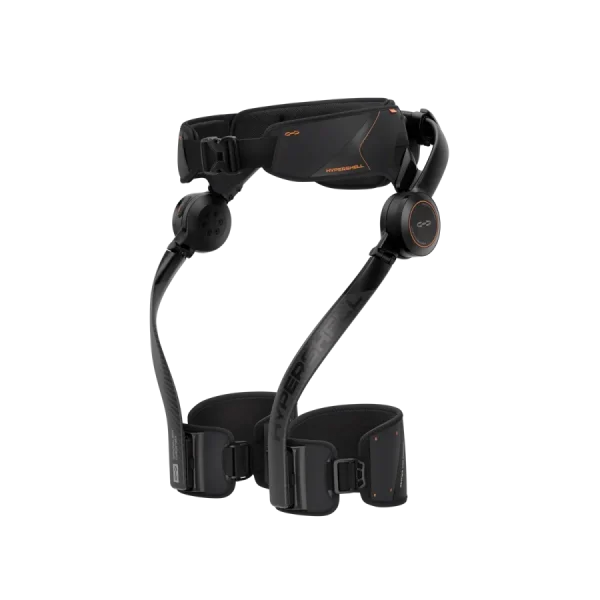
Hypershell X Ultra
- 1,000 W and 12 modes
- Two 18.6-mile batteries in the box
- SGS-certified carbon fiber frame
1,000 W and two 18.6-mile batteries for $600 less than the X Ultra S, which has the same power and range. It pays off on steep, repeated climbs and heavy loads; for lighter needs, the X Carbon costs $400 less.Our score Our score breakdownAssist power9.5Real-world range10.0Weight and comfort9.0Value for money10.0Warranty and support9.5 -
2. Best value
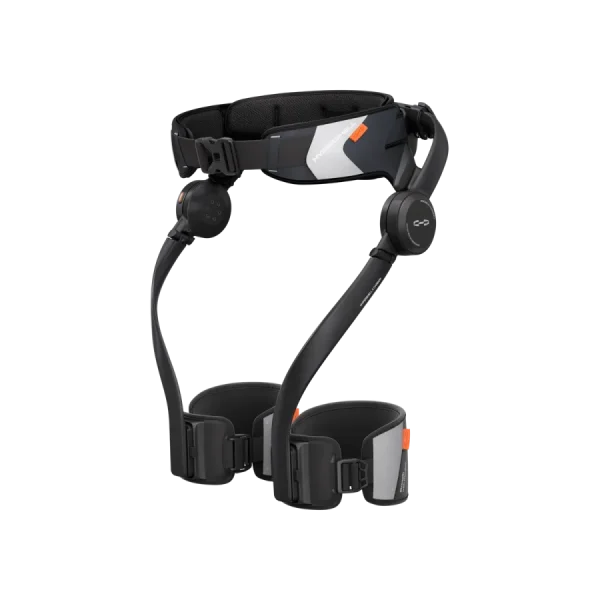
Hypershell X Carbon
- Two batteries for the price of the one-battery X Pro S
- GORE-TEX outer fabric and titanium hip levers
- Free shipping from a US warehouse
Two batteries, a carbon frame and GORE-TEX fabric for the price of the one-battery X Pro S. The X Ultra adds 1,000 W and 37.3 miles of range for $400 more, so it stays our top pick; the X Carbon is the smart step below it.Our score Our score breakdownAssist power9.0Real-world range8.5Weight and comfort9.0Value for money9.0Warranty and support9.5 -
3. Newest 1,000 W platform
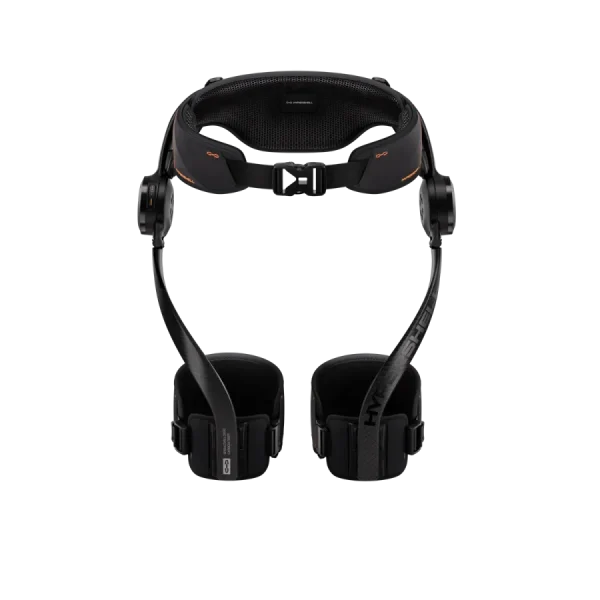
Hypershell X Max S
- The cheapest 1,000 W model in the S series
- 18.6 miles on one battery
- Free shipping from a US warehouse
A strong motor on the newest platform, but it costs $100 more than the X Ultra and ships with one 18.6-mile battery instead of two. Choose it only if you want the S series platform and its HyperIntuition AI.Our score Our score breakdownAssist power9.5Real-world range9.0Weight and comfort8.5Value for money7.5Warranty and support9.5 -
4. Highest peak power
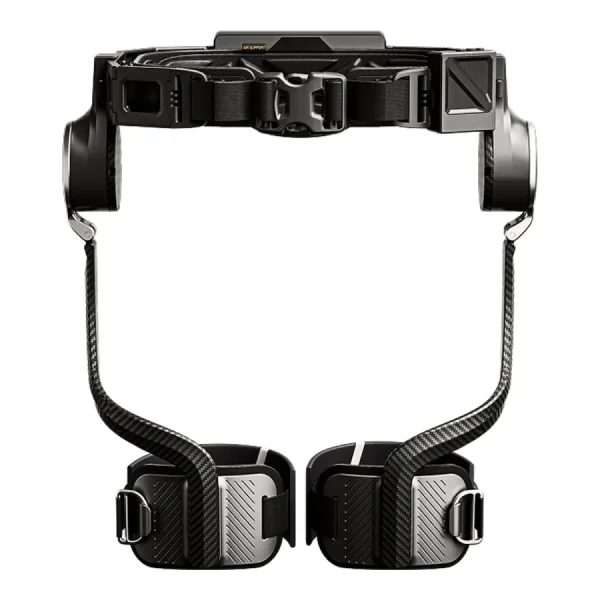
Ascentiz H Ultra
- 1,100 W peak
- Two batteries in the box
- 16 recognized movements
1,100 W peak and two batteries in the box: 100 W above the 1,000 W Hypershells. Main drawback: the X Ultra costs $300 less and offers 37.3 miles of range against 31.1, from a brand that scores higher for support in our grid.Our score Our score breakdownAssist power9.5Real-world range9.5Weight and comfort9.0Value for money7.0Warranty and support7.0 -
5. Lowest-priced 1,000 W
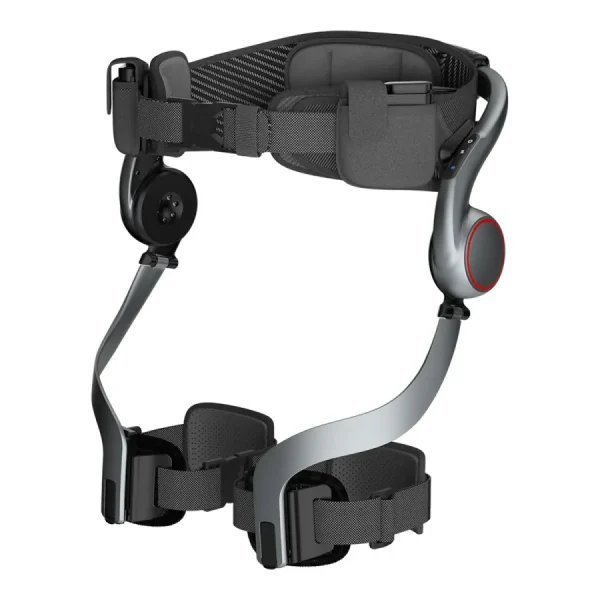
AstroShell Alpha 1
- 1,000 W peak at the lowest price
- Two batteries in the box
- 5.3 lb with both batteries on board
With 1,000 W peak, two batteries and 5.3 lb, the Alpha 1 brings top-tier power at a mid-range price. Main drawback: 14.9 miles in total, spare battery included; the X Ultra goes much further for $200 more.Our score Our score breakdownAssist power9.5Real-world range8.0Weight and comfort9.0Value for money8.0Warranty and support7.0 -
6. Lowest price
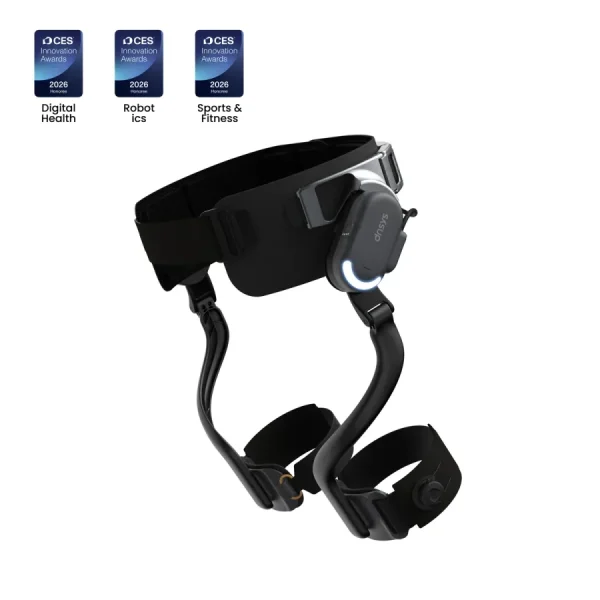
Dnsys X1
- 900 W peak and 40 N·m of torque
- The least expensive motor above 800 W
- The lightest hip model in our comparison
A credible but rougher alternative: 900 W and 40 N·m for $110 less than the Hypershell X Carbon. Range and strap comfort fall behind Hypershell, and it ships with one battery. Consider it when price is the deciding factor.Our score Our score breakdownAssist power9.0Real-world range7.0Weight and comfort9.0Value for money9.0Warranty and support7.0 -
7. Series S entry point
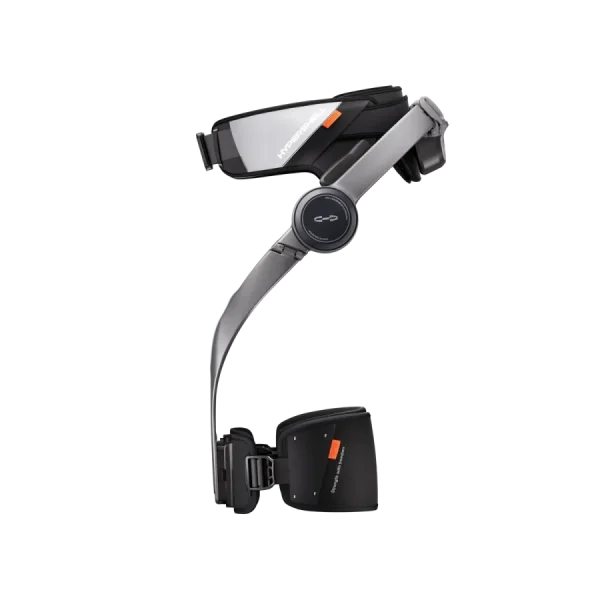
Hypershell X Pro S
- Lowest price in the S series
- HyperIntuition AI
- Free shipping from a US warehouse
The cheapest way into Hypershell’s new S series: 800 W, 10 modes and the HyperIntuition AI. Main drawback: one 10.9-mile battery, when the X Carbon gives you two for the same price.Our score Our score breakdownAssist power9.0Real-world range7.0Weight and comfort8.5Value for money7.5Warranty and support9.5
Editorial and user score scale: from < 5 to 10 · amber is reserved for the user score
The essentials in 30 seconds
- For most hikers Hypershell X Carbon, Two batteries in the box for $999 (Oct 1, 2026), the price of the one-battery X Pro S: a full day of elevation gain is covered ($999)
- To spend the least Dnsys X1, $889 for the X1 Carbon on Oct 1, 2026, the lowest price in the comparison (a Lite version is $689) ($889)
- For serious trekking Hypershell X Ultra, 1,000 W and two 18.6-mile (30 km) batteries: no model in the comparison goes further ($1,399)
Golden rule: Fit decides comfort: before you order, check your waist and thigh measurements against the brand's size chart, and read the return policy.
The right hiking exoskeleton for your needs
Already know what you are looking for? Here is the direct answer:
| Your need | Our pick | Why this one |
|---|---|---|
| 🌱 Short outings, tight budget | Dnsys X1 | $889 for the X1 Carbon (Oct 1, 2026), the lowest price in the comparison; an X1 Lite is $689 |
| 🥾 Regular hiking, best value | Hypershell X Carbon | Two batteries (2 × 10.9 miles) for $999 (Oct 1, 2026), the price of the one-battery X Pro S |
| ⛰️ Long distances, serious trekking | Hypershell X Ultra | The biggest reserve in the comparison: 1,000 W and two 18.6-mile (30 km) batteries |
| 🌧️ Rough weather | Hypershell X Carbon | The only one here to add a GORE-TEX outer fabric to an IP54 (dust and splash) rating |
| 💵 The most power for the money | AstroShell Alpha 1 | 1,000 W for $1,199 on the brand’s store (Oct 1, 2026), the lowest-priced 1,000 W here, with two batteries |
| 🦵 Downhills that wear on your knees | Dnsys Z1 (outside the hip ranking) | A knee exoskeleton: 900 W and KERS (kinetic energy recovery) on descents |
Still torn between two? The step-by-step guide settles it, and the detailed top 7 gives the proof.
The top 7 hiking exoskeletons in detail
The seven models, in the order of our scores. Two models share a score of 8.3 (the Dnsys X1 and the X Pro S); the X1 is listed first.
Best for hiking
Hypershell X Ultra
Two 18.6-mile batteries and 1,000 W: the biggest power reserve in this comparison, for treks and long days far from any outlet.
On the trail, the X Ultra combines the two things that decide a big day: 1,000 W for the climbs and two 18.6-mile (30 km) batteries, at 5.5 lb (2.5 kg) with a battery in place. Main reservation: $1,399 (Oct 1, 2026), $400 more than the X Carbon.
Pros
- Two 18.6-mile (30 km) batteries, the biggest reserve in the comparison
- 1,000 W and 12 modes, including snow and sand terrain modes
- 5.5 lb (2.5 kg) with battery, no heavier than the 800 W X Carbon
Cons
- $1,399 (Oct 1, 2026), $400 more than the X Carbon
- A reserve many hikers never use: 800 W already covers everyday trail use
Who it's for
The trekker with a heavy pack and the hiker used to long days of elevation gain, with no recharge in sight.
Who it's not for
The weekend hiker: the X Carbon does the same job for $400 less on ordinary trails.
Our detailed review
The X Ultra is Hypershell’s answer to one question: what happens when the slope does not end? 1,000 W at peak and two 18.6-mile (30 km) batteries: no model in this comparison goes further, at 5.5 lb (2.5 kg) with a battery in place. Its 12 modes even cover snow and sand terrain.
That earns it first place. The flip side is the price: at $1,399 (Oct 1, 2026) you pay for headroom that many hikers will not use, and in our view the 800 W of the X Carbon already covers everyday trail use.
Your pick when every outing is a big climb
Repeated days of heavy elevation gain, a loaded pack, treks where every recharge is uncertain: this is its terrain. For a Sunday hike, take the X Carbon and keep the $400.
Technical specs
| Motor power | 1,000 W peak, 16.2 lb-ft (22 N·m) |
|---|---|
| Weight | 5.5 lb (2.5 kg), battery included |
| Battery range | 18.6 mi (30 km) per battery |
| Batteries in the box | 2 batteries, 37.3 mi (60 km) combined |
| Modes | 12 modes, including snow and sand |
| App | iOS and Android, MotionEngine AI |
| Water resistance | IP54 |
$1,399
BuyBest value for most hikers
Hypershell X Carbon
Two batteries in the box for $999 (Oct 1, 2026), a GORE-TEX outer fabric and 800 W: the all-round pick for regular hikers.
On the trail, the X Carbon wins where it counts: two 10.9-mile (17.5 km) batteries in the box, enough for a real day of elevation gain, at the price of a one-battery rival. At $999 (Oct 1, 2026), it is the most complete package under $1,000 in this comparison.
Pros
- 2 × 10.9 miles (17.5 km): two batteries for $999 (Oct 1, 2026), swapped at a rest stop
- GORE-TEX outer fabric on top of IP54, plus titanium hip levers
- The app’s AI (MotionEngine) adjusts the push to your stride on climbs, flats and descents
Cons
- Few owner reports of its own: most come from the mechanically identical X Pro
- Real range is about half the spec sheet at strong assist under a loaded pack
Who it's for
The regular hiker who logs elevation gain every weekend and wants to finish without doing battery math.
Who it's not for
The short-outing hiker on a tight budget: the Dnsys X1 costs $110 less.
Our detailed review
The X Carbon’s strongest argument for hikers is the box: two 10.9-mile (17.5 km) batteries at $999 (Oct 1, 2026), the price of the one-battery X Pro S. The real-world nuance matters just as much: at 70% assist under a heavy pack, one battery drops to about 5 miles (8 km), so the second battery is what turns a short outing into a full day.
The rest is the X Pro platform in a tougher build: 800 W at peak, 10 modes, assist up to 12 mph (20 km/h), a GORE-TEX outer fabric and titanium hip levers, all at 5.5 lb (2.5 kg) with a battery. Its AI, MotionEngine, adjusts the push to your stride. The caution: most owner reports come from the X Pro, which has the same mechanics but is unavailable in the US store as of Oct 1, 2026.
Built for the every-weekend hiker
If you hike weekly, this is the one we would point most readers to: two batteries and a weather-ready build for the price of a one-battery rival. Step up to the X Ultra only if you need 1,000 W and the longest days.
Technical specs
| Motor power | 800 W peak, 13.3 lb-ft (18 N·m), 2 motors |
|---|---|
| Weight | 5.5 lb (2.5 kg), battery included |
| Battery range | 10.9 mi (17.5 km) per battery |
| Batteries in the box | 2 batteries, 21.7 mi (35 km) combined |
| Modes | 10 modes, assist up to 12.4 mph (20 km/h) |
| App | iOS and Android, MotionEngine AI |
| Water resistance | IP54, -4 °F to 140 °F (-20 °C to 60 °C) |
$999
BuyNewest 1,000 W platform
Hypershell X Max S
The Series S platform with 1,000 W and a single 18.6-mile battery: strong climbing power, but one battery fewer than the X Ultra.
On the trail, the X Max S climbs like the X Ultra: 1,000 W and 10 modes on Hypershell’s newest Series S platform. What holds it to third is the box: one 18.6-mile (30 km) battery, half the X Ultra’s reserve, for $100 more.
Pros
- 1,000 W and 10 modes on Hypershell’s newest platform
- An 18.6-mile (30 km) battery, the same rated range per battery as the X Ultra
- Ships from a US warehouse with free shipping
Cons
- $1,499 (Oct 1, 2026) for one battery, $100 more than the two-battery X Ultra
- 5.7 lb (2.6 kg) with battery, a little heavier than the X Ultra at 5.5 lb
Who it's for
The hiker who wants the newest Hypershell platform and 1,000 W, and whose outings fit within one battery.
Who it's not for
Anyone buying on value: the X Ultra costs $100 less and ships with two batteries.
Our detailed review
The X Max S brings the Series S platform down from the flagship price: 1,000 W at peak and an 18.6-mile (30 km) battery, with 10 modes and Hypershell’s newer HyperIntuition AI.
In the US store, the math is awkward. It costs $100 more than the X Ultra (Oct 1, 2026) yet ships with one battery instead of two, and it is a bit heavier, at 5.7 lb (2.6 kg) against 5.5 lb. Series S is also newer, so there are fewer owner reports to lean on.
Choose it for the platform, not the price tag
If the latest Hypershell generation matters to you, the Max S delivers 1,000 W. If you are buying trail value, the X Ultra costs less and carries twice the batteries.
Technical specs
| Motor power | 1,000 W peak |
|---|---|
| Weight | 5.7 lb (2.6 kg), battery included |
| Battery range | 18.6 mi (30 km) per battery |
| Batteries in the box | 1 battery |
| Modes | 10 modes |
| App | iOS and Android, HyperIntuition AI |
| Water resistance | IP54, 14 °F to 140 °F (-10 °C to 60 °C) |
$1,499
BuyHighest peak power
Ascentiz H Ultra
1,100 W at peak and two batteries for 31 miles: the highest peak power in this comparison, shipped from a US warehouse.
On the trail, the H Ultra tops the spec sheet: 1,100 W at peak and two batteries for 31 miles (50 km) in a titanium and carbon frame at 5.5 lb (2.5 kg). Main reservation: it costs $300 more than the X Ultra for 100 W more and about 6 miles less range.
Pros
- 1,100 W at peak, 100 W above the X Ultra
- Two batteries in the box for 31 miles (50 km) combined
- 16 recognized movements and assist up to 17 mph (28 km/h)
Cons
- $300 more than the X Ultra for about 6 miles (10 km) less range
- Support still to prove: a young brand with a short track record
Who it's for
The hiker who wants the highest peak power and does not mind a younger brand.
Who it's not for
The value-minded: the X Ultra costs $300 less and goes about 6 miles further.
Our detailed review
The Ascentiz H Ultra is the power leader here: 1,100 W at peak, 24 N·m per motor, a titanium and carbon frame and two batteries for 31 miles (50 km). Each battery recharges in about 65 minutes, and the whole kit weighs 5.5 lb (2.5 kg).
The catch is the comparison with Hypershell: at $1,699 (Oct 1, 2026) it costs $300 more than the X Ultra, for 100 W more and about 6 miles (10 km) less range. It ships from a US warehouse in 2 to 7 business days, but Ascentiz is a younger brand and its support track record is short.
Worth a look when peak power breaks the tie
Choose it for the extra 100 W and the frame. Choose the X Ultra for the longer range and $300 less.
Technical specs
| Motor power | 1,100 W peak, 17.7 lb-ft (24 N·m) per motor, 2 motors |
|---|---|
| Weight | 5.5 lb (2.5 kg), battery and comfort kit included |
| Battery range | 15.5 mi (25 km) per battery |
| Batteries in the box | 2 batteries, 31.1 mi (50 km) combined |
| Modes | 16 recognized movements, assist up to 17.4 mph (28 km/h) |
| App | Ascentiz app, adaptive AI assist |
| Water resistance | IP54, -4 °F to 140 °F (-20 °C to 60 °C) |
$1,699
BuyLowest-priced 1,000 W
AstroShell Alpha 1
1,000 W and two batteries at 5.3 lb (2.4 kg), from a Florida brand: the cheapest 1,000 W here, if 15 miles in total is enough.
On the trail, the Alpha 1 is the 1,000 W you can afford: $1,199 on AstroShell’s own store (Oct 1, 2026) for 1,000 W, two batteries and 5.3 lb (2.4 kg) with both on board. Main reservation: 14.9 miles (24 km) in total, and about half that at strong assist.
Pros
- 1,000 W at peak, at the lowest price of any 1,000 W model here
- Two batteries on board; the spare stays in its bay and swaps in without cutting assist
- 5.3 lb (2.4 kg) with both batteries, thanks to a magnesium alloy frame
Cons
- 14.9 miles (24 km) in total, 7.5 miles per battery; at strong assist, count on half
- Quality-control worries in a small sample of Amazon reviews
Who it's for
The hiker who wants 1,000 W without a flagship price and keeps outings within about 15 miles.
Who it's not for
Anyone going further: the X Ultra more than doubles the range for $200 more.
Our detailed review
AstroShell is a Florida brand, and the Alpha 1 is its hip exoskeleton: 1,000 W at peak and 40 N·m of continuous torque, with two 7.5-mile (12 km) batteries and a magnesium alloy frame. You may also see it listed as Alpha 1 Classic or Alpha 1 Pro: it is the same device. AstroShell’s own store lists it at $1,199 (Oct 1, 2026); it is also sold on Amazon, where the price differs, so check the current listing.
Owner feedback is the caution. The 25 Amazon.com buyers who rated it give 4 out of 5 (Oct 1, 2026) and talk mostly about climbs: the effort stays yours, but you reach the top with lighter legs. Two of them, though, received an incomplete unit, and one reported no reply from support.
A budget route to 1,000 W for shorter outings
If your outings fit in about 15 miles in total, the $200 difference with the X Ultra is real money. Beyond that, the X Ultra’s reserve is worth the step up.
Technical specs
| Motor power | 1,000 W peak, 29.5 lb-ft (40 N·m) continuous torque |
|---|---|
| Weight | 5.3 lb (2.4 kg) with both batteries, 4.4 lb (2 kg) without |
| Battery range | 7.5 mi (12 km) per battery |
| Batteries in the box | 2 batteries, 14.9 mi (24 km) combined |
| Modes | 3 modes (smart, transparent, fitness), 12 recognized movements, assist up to 13.7 mph (22 km/h) |
| App | iOS and Android, adaptive AI assist |
| Water resistance | IP54, -4 °F to 140 °F (-20 °C to 60 °C) |
$1,199
BuyLowest price
Dnsys X1
900 W and 40 N·m at the lowest price in this comparison: $889 (Oct 1, 2026) for the X1 Carbon, shipped from a Los Angeles warehouse.
The X1 is the cheapest model in this top seven, with 900 W at peak, 40 N·m of torque and a battery you swap in seconds. Main reservation: about half the battery gone in 90 minutes at maximum assist, and straps that creep up.
Pros
- 900 W at peak and 40 N·m of torque for $889 (Oct 1, 2026)
- 4.9 lb (2.2 kg) with battery, the lightest here, and the battery swaps in seconds
- Ships from a Los Angeles warehouse in 3 to 7 business days
Cons
- Straps that creep up and a belt that runs warm
- Real range falls short: about half the battery in 90 minutes at maximum assist
Who it's for
The hiker on short, steep outings who wants the lowest price in the comparison.
Who it's not for
Anyone planning full-day outings on one charge: one 9.3-mile (15 km) battery will not stretch that far.
Our detailed review
The Dnsys X1 is the cheapest in this comparison: 900 W at peak and 40 N·m of torque for $889 (Oct 1, 2026), with a lighter 4.9 lb (2.2 kg) build including the battery. A cheaper X1 Lite sells for $689; the figures here are for the X1 Carbon, so check the Lite’s spec sheet before you buy it.
The gap between spec sheet and trail is real, though: about half the battery gone in 90 minutes at maximum assist, straps that creep up and a belt that traps heat. On a three-hour loop, those details decide.
Try it if your hikes are short and steep
At $889 (Oct 1, 2026) it sits $110 under the X Carbon and makes sense for short loops where one battery is enough. For full days, the X Carbon’s second battery is worth the difference. Our Dnsys X1 review has the full breakdown.
Technical specs
| Motor power | DNA-1 motor, 900 W peak, 29.5 lb-ft (40 N·m) |
|---|---|
| Weight | 4.9 lb (2.2 kg), battery included; 3.5 lb (1.6 kg) without |
| Battery range | 9.3 mi (15 km) per battery |
| Batteries in the box | 1 battery, 2,400 mAh, swappable |
| Modes | Continuous adjustment in the app |
| App | iOS and Android |
| Water resistance | IP54 |
$889
BuySeries S entry point
Hypershell X Pro S
The entry to Hypershell's Series S: 800 W on the newest platform and a reworked harness, with one battery in the box.
On the trail, the X Pro S pushes like Hypershell’s older mid-range model: 800 W and 10 modes on the new Series S platform. What puts it seventh is the box: one 10.9-mile (17.5 km) battery, half the X Carbon’s reserve, for the same $999 (Oct 1, 2026).
Pros
- The entry ticket to Series S at $999 (Oct 1, 2026)
- 800 W and 10 modes, the same power as the X Carbon
- Ships from a US warehouse with free shipping
Cons
- One 10.9-mile battery in the box, where the X Carbon ships two for the same price
- 5.7 lb (2.6 kg): about 0.2 lb more than the X Carbon at the same power
Who it's for
The hiker who keeps gear for years and wants Hypershell’s newest line at its lowest entry price.
Who it's not for
Anyone planning a full day out: the X Carbon ships two batteries for the same $999 (Oct 1, 2026).
Our detailed review
The older X Pro and X Go are unavailable in Hypershell’s US store (Oct 1, 2026), which makes the X Pro S the entry point to the lineup. For a hiker the spec sheet is solid: 800 W, 10 modes and 10.9 miles (17.5 km) per battery.
Its seventh place is decided in the box: a single battery, where the X Carbon ships two for the same $999 (Oct 1, 2026). Add about 0.2 lb of extra weight (5.7 lb against 5.5 lb) and, on a long day on the trail, the X Carbon keeps the advantage.
Its appeal is the lineup, not the weekend loop
It makes this top seven for one reason: it is the lowest-priced way into Hypershell’s newest Series S platform. If that matters to you, it is a real argument; if you want the best buy for the coming season, the X Carbon stays ahead.
Technical specs
| Motor power | 800 W peak |
|---|---|
| Weight | 5.7 lb (2.6 kg), battery included |
| Battery range | 10.9 mi (17.5 km) per battery |
| Batteries in the box | 1 battery |
| Modes | 10 modes |
| App | iOS and Android, HyperIntuition AI |
| Water resistance | IP54, 14 °F to 140 °F (-10 °C to 60 °C) |
$999
BuySomeone missing? The Hypershell X Ultra S (the X Ultra’s power and range for $600 more) is ranked in our best exoskeleton comparison and has its own review. The Hypershell Halo, which assists both hip and knee, is a $2,299 preorder (Oct 1, 2026) that ships in late November 2026 (see the review). And the Dnsys Z1 knee exoskeleton is covered in its own review.
Hiking exoskeleton comparison table: all 7 models
Prices checked on 10/01/2026
Swipe the table to see all columns →
| Product | Motor power | Weight | Battery range | Batteries in the box | Modes | App | Price | Score |
|---|---|---|---|---|---|---|---|---|
| Hypershell X Ultra Our pick | 1,000 W | 5.5 lb | 18.6 mi | 2 batteries | 12 modes | App + AI | $1,399 at Hypershell | 9.6 |
| Hypershell X Carbon | 800 W | 5.5 lb | 10.9 mi | 2 batteries | 10 modes | App + AI | $999 at Hypershell | 9.0 |
| Hypershell X Max S | 1,000 W | 5.7 lb | 18.6 mi | 1 battery | 10 modes | App + AI | $1,499 at Hypershell | 8.8 |
| Ascentiz H Ultra | 1,100 W | 5.5 lb | 15.5 mi | 2 batteries | 16 movements | App + AI | $1,699 at Ascentiz | 8.5 |
| AstroShell Alpha 1 | 1,000 W | 5.3 lb | 7.5 mi | 2 batteries | 3 modes | App + AI | $1,199 at AstroShell | 8.4 |
| Dnsys X1 | 900 W | 4.9 lb | 9.3 mi | 1 battery | In-app | App | $889 at Dnsys | 8.3 |
| Hypershell X Pro S | 800 W | 5.7 lb | 10.9 mi | 1 battery | 10 modes | App + AI | $999 at Hypershell | 8.3 |
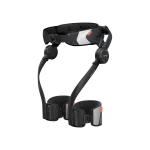
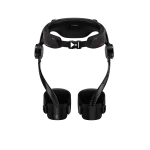
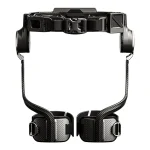
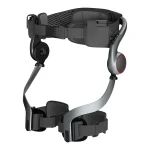
Pros and cons of a hiking exoskeleton
The honest balance sheet, with numbers, before you open the trail map:
What you gain
- Climbs that cost noticeably less: brands claim 20 to 40% less leg effort depending on the model, and the lift is clearest on slopes
- Elevation gain back in reach: keep up with a faster group, return after years off the trail, lengthen your outings
- A lighter-feeling pack, indirectly: Hypershell claims up to 66 lb (30 kg) of perceived load relief (the brand’s own claim)
- Free hands: all the assist happens at the hip, with poles and pack unchanged
What you accept in return
- Real range about half the spec sheet: with a dead battery you carry 4.9 to 5.7 lb of dead weight on your hips
- Weight, straps and noise: chafing and sweat are possible on long outings, plus motor noise and warmth at full assist
- A budget of $889 to $1,699 (checked Oct 1, 2026), plus the discipline of charging
Does the gains column match your outings? Then the next step is finding the right model, and that is what the step-by-step guide does.
How to choose a hiking exoskeleton: step by step
Five questions, in order. For each one, the table tells you which model to take, so you can skip the text and read only the tables. For the broader framework across every use, see our guide on how to choose an exoskeleton.
1. Your budget
We rank only brands with a verifiable US store and published specs. Very cheap unbranded motorized exoskeletons are not in this comparison, and we suggest you skip them. Prices below were checked on Oct 1, 2026.
| Your budget | Our pick | Why this one |
|---|---|---|
| 💵 Under $900 | Dnsys X1 | $889 for the X1 Carbon (Oct 1, 2026), the lowest price in the comparison; an X1 Lite is $689 |
| 💵💵 About $1,000 | Hypershell X Carbon | For $110 more than the X1: a second battery and a GORE-TEX outer fabric |
| 💵💵💵 $1,200 to $1,400 | Hypershell X Ultra or AstroShell Alpha 1 | The X Ultra is $1,399 (Oct 1, 2026) for 1,000 W and two 18.6-mile batteries; the Alpha 1 is $200 less with a 14.9-mile total |
2. How often you hike
| Your rhythm | Our pick | Why this one |
|---|---|---|
| 🗓️ A few hikes a year | Dnsys X1 | The lowest price in the comparison: a few outings a year do not call for more |
| 🥾 Elevation gain every week | Hypershell X Carbon | 2 × 10.9 miles: two batteries for $999 (Oct 1, 2026), the best-value step up in the lineup |
| ⛰️ Treks and long days | Hypershell X Ultra | Two 18.6-mile batteries and 12 modes: no model in the comparison goes further |
3. Your real mileage
The market rule: divide the spec-sheet range by two in sustained use, then compare it with your typical outing. And two swappable batteries beat one big one: a swap takes a minute at a rest stop, while a recharge does not.
| Your typical outing | Our pick | Why this one |
|---|---|---|
| 🔋 Under 5 miles | Dnsys X1 | Its single battery (9.3 miles on the spec sheet) covers this length, and the battery is interchangeable |
| 🔋🔋 5 to 10 miles, or big climbs | X Carbon or X Max S | The X Carbon has two swappable batteries (2 × 10.9 miles); the X Max S has one 18.6-mile battery |
| 🔋🔋🔋 Over 10 miles, heavy pack | Hypershell X Ultra | Two 18.6-mile batteries, the biggest reserve in the comparison |
4. Your weather
| Your conditions | Our pick | Why this one |
|---|---|---|
| ☀️ Summer outings, dry trails | The whole top 7, starting with the Dnsys X1 | IP54 covers dust and splashes across the lineup |
| 🌧️ Showers, mud | Hypershell X Ultra | IP54: showers and mud pass, immersion never (take it off before a stream crossing) |
| ❄️ Frequent rain, winter | Hypershell X Carbon | The only one here with a GORE-TEX outer fabric, rated from -4°F to 140°F (-20°C to 60°C) |
5. Your fit
| What to check | How | Why it matters |
|---|---|---|
| 📏 Waist and thigh length | Against the maker’s size range, before you order | Creeping straps are a common complaint in owner reports: fit decides comfort |
| 🎒 Comfort with your pack | Wear it with your loaded pack as soon as it arrives, and check the return window | Strap rubbing under a hip belt shows up loaded, not empty |
| 👖 Chafing | Long shorts or leggings under the belt | Chafing is common with the Dnsys X1 |
In short, most readers of this page end up between the Dnsys X1 (budget) and the X Carbon (real-world use), and that is exactly the $110 gap analyzed in the ranking.
Hip, knee or ankle: where should the assist go?
Three possible zones, three different uses: the best exoskeleton for your legs depends on the one that tires first. The table places each, and shows what you can actually buy in the US. For every hip model, see our best exoskeleton ranking.
| Zone assisted | What it changes on a hike | What is on offer in the US |
|---|---|---|
| ⬆️ The hip | Drives the leg forward on climbs, where hiking costs the most | Our whole top 7: the architecture that dominates the market |
| ⬇️ The knee | Takes body weight on descents, step after step | Dnsys Z1 ($1,299, Oct 1, 2026): 900 W with energy recovery on descents; the Hypershell Halo assists hip and knee ($2,299 preorder) |
| 🏃 The ankle | Drives the stride itself | We do not rank a consumer ankle model for hiking at this time |
One reminder that is not negotiable: joint pain means a doctor or a physical therapist first. These machines are recreation equipment, not medical devices.
Real range, rain, backpack: what the trail demands
Let us start with what bothers: these devices are not performance tools. A fit hiker on a rolling trail may gain little. The machine changes things for the hiker whom elevation gain slows down or whose pack weighs them down: it lowers the entry ticket to the mountains, it does not move records.
| On the trail | The rule to remember |
|---|---|
| 🔋 Range | Spec sheet ÷ 2 in sustained use; keep the spare battery dry in your pack |
| 💧 Rain and mud | IP54 across the top 7: showers and mud, yes; immersion, never |
| 🎒 Backpack | Compatible with a pack; the device’s weight sits at the pelvis. Try it with YOUR loaded pack, because strap rubbing shows up there |
| 🌡️ Heat and noise | Some owners report warm motors and an audible hum at full assist; long shorts fix most chafing |
| ✋ Trekking poles | Nothing changes, your hands stay free |
In the end, the trail always decides, which is why the buying and returns details below matter. If you want an everyday walking model instead of a trail one, see the best exoskeleton for walking.
How much does a hiking exoskeleton cost?
From $889 to $1,699 for the seven models here (checked Oct 1, 2026). What each step up actually buys:
| Model | Price (Oct 1, 2026) | What the gap buys |
|---|---|---|
| Dnsys X1 | 💵 $889 | The floor of the comparison: 40 N·m, one battery and a light 4.9 lb build (an X1 Lite is $689 as of Oct 1, 2026) |
| X Carbon | 💵 $999 | +$110 over the X1: a second battery and a GORE-TEX outer fabric |
| X Pro S | 💵 $999 | Same price as the X Carbon: the Series S platform, but one battery fewer |
| AstroShell Alpha 1 | 💵 $1,199 | +$200 over the X Carbon: 1,000 W and 5.3 lb with both batteries on board, but a 14.9-mile total range |
| X Ultra | 💵 $1,399 | +$400 over the X Carbon: 1,000 W and two 18.6-mile batteries |
| X Max S | 💵 $1,499 | +$100 over the X Ultra: the Series S platform and 1,000 W, with one battery instead of two |
| Ascentiz H Ultra | 💵 $1,699 | +$300 over the X Ultra: 1,100 W and a titanium and carbon frame, with about 6 miles less range |
Prices were checked on Oct 1, 2026 and are always indicative; the comparison table above shows the date of the latest check. The Alpha 1 price comes from AstroShell’s own store. For the full market view, maintenance budget included, read our exoskeleton price guide.
Where to buy, how it ships, and whether you can try one first
Most hiking exoskeletons are bought online straight from the brand. The US store shipping times we found on Oct 1, 2026:
| Brand | Ships from | Delivery time listed |
|---|---|---|
| Hypershell | A US warehouse, free shipping | About 8 business days (contiguous US) |
| Dnsys | A Los Angeles warehouse | 3 to 7 business days |
| Ascentiz | A US warehouse | 2 to 7 business days |
| AstroShell | Its own store, also sold on Amazon | See the store listing |
We have not verified any in-store trial or day rental for hiking exoskeletons in the US, so most buyers order online. Before you do, read the return policy on the brand’s store page: terms change, so we do not list them here. Measure your waist and thighs against the size chart first, and test the fit with your loaded pack as soon as the box arrives.
Your questions before you buy
How far does one battery really go on a hike?
Expect a third to a half less than the spec-sheet figure, measured at moderate assist on easy terrain. A concrete example from our reading of owner reports: about 5 miles (8 km) per 10.9-mile battery at 70% assist under a heavy pack. That is exactly why the two batteries in the box of the X Ultra and X Carbon weigh so heavily in our ranking.
Does an exoskeleton help carry a heavy pack?
Indirectly, yes: it does not carry the pack for you, but it reduces the muscle effort of the legs that do, especially uphill. Hypershell claims up to 66 lb (30 kg) of perceived load relief; take that figure for what it is, a brand claim. Owner reports consistently describe an easier climb, although the effort stays yours.
Does it help on descents?
Little, for the hip models in this comparison: some modes slightly brake the movement, but descents load mostly the knees. If that is your weak spot, look at a knee exoskeleton like the Dnsys Z1, designed to assist the knee and recover energy on descents. And persistent knee pain belongs with a doctor or physical therapist first.
Can you hike in the rain with an exoskeleton?
Yes for rain and mud: every model in our top 7 is rated IP54, and the X Carbon adds a GORE-TEX outer fabric. No for immersion: deep stream crossings are not covered by any model. When the weather looks doubtful, keep the spare battery dry in your pack.
I am already a strong hiker: what will it do for me?
Honestly, maybe nothing: a trained hiker on easy terrain will gain little. The machine makes sense when elevation gain slows you down, when your pack is heavy, or when you want to keep up with a faster group without finishing wiped out.
Dnsys X1 or Hypershell X Carbon for my first assisted hike?
It comes down to how often you hike. A few hikes a year: the Dnsys X1 is enough, and it costs $110 less (Oct 1, 2026). Elevation gain every week: those $110 buy a second battery and a GORE-TEX outer fabric, and that is the investment that pays off. One more note: if you were looking for the Hypershell X Pro or X Go, both are unavailable in the US store as of Oct 1, 2026.

The Editorial Team
Comparative analysis of exoskeletons and mobility assistance
How we review
- Cross-checked French and English sources: published independent tests and feedback from real users.
- Verified specifications from several sources, with data normalized for easy comparison.
- No measurements of our own: manufacturer values are flagged as such.
- Prices and availability tracked regularly, rankings continuously updated.