What is the best exoskeleton in 2026? We ranked nine hip exoskeletons you can buy in the US, from spec sheets, owner reviews and our scoring grid. In first place: the Hypershell X Ultra, with 1,000 watts (W) of peak power and two 18.6-mile batteries for $1,399 (price checked on Oct 1, 2026), $100 less than the X Max S, which ships with one battery. Full ranking, dated prices and picks by profile below.
1 to 9 products · Updated 10/02/2026
-
1. Our pick
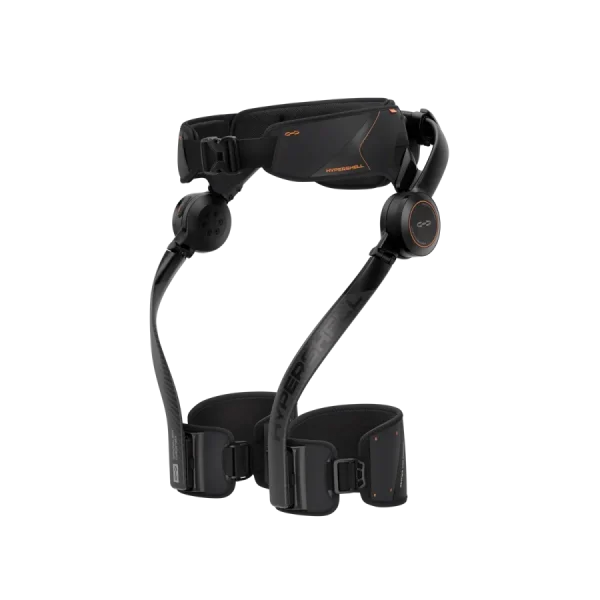
Hypershell X Ultra
- 1,000 W and 12 modes
- Two 18.6-mile batteries in the box
- SGS-certified carbon fiber frame
1,000 W and two 18.6-mile batteries for $600 less than the X Ultra S, which has the same power and range. It pays off on steep, repeated climbs and heavy loads; for lighter needs, the X Carbon costs $400 less.Our score Our score breakdownAssist power9.5Real-world range10.0Weight and comfort9.0Value for money10.0Warranty and support9.5 -
2. The newest platform
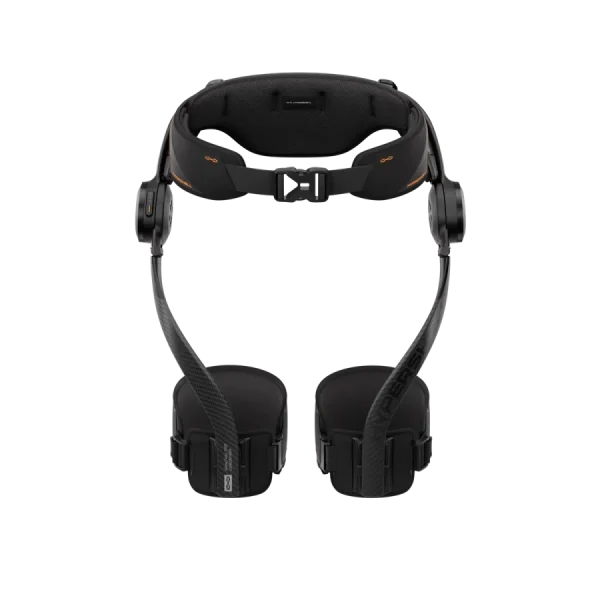
Hypershell X Ultra S
- 37.3 miles of combined range
- 1,000 W, 12 modes and the newer HyperIntuition AI
- Two batteries and a 65 W wall charger
The same 1,000 W and 37.3 miles as the X Ultra, for $600 more. The extra buys the newer HyperIntuition AI and a 65 W wall charger. Worth it only if you want the very latest platform; otherwise the X Ultra is the smarter buy.Our score Our score breakdownAssist power9.5Real-world range10.0Weight and comfort9.0Value for money7.0Warranty and support9.5 -
3. Two batteries under $1,000
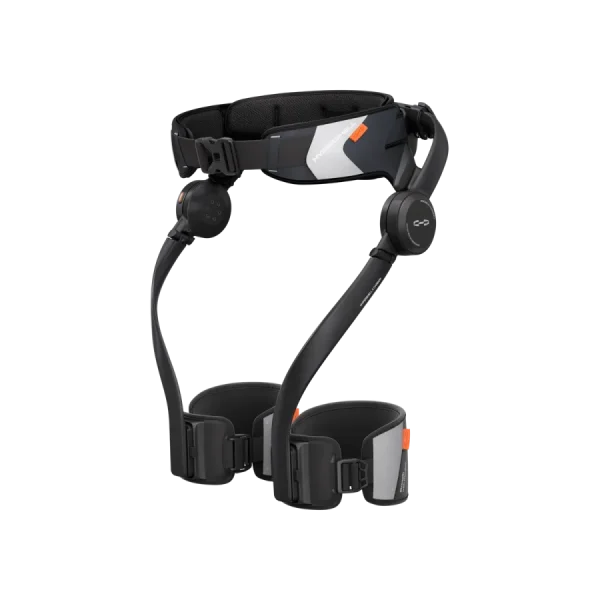
Hypershell X Carbon
- Two batteries for the price of the one-battery X Pro S
- GORE-TEX outer fabric and titanium hip levers
- Free shipping from a US warehouse
Two batteries, a carbon frame and GORE-TEX fabric for the price of the one-battery X Pro S. The X Ultra adds 1,000 W and 37.3 miles of range for $400 more, so it stays our top pick; the X Carbon is the smart step below it.Our score Our score breakdownAssist power9.0Real-world range8.5Weight and comfort9.0Value for money9.0Warranty and support9.5 -
4. 1,000 W, one battery
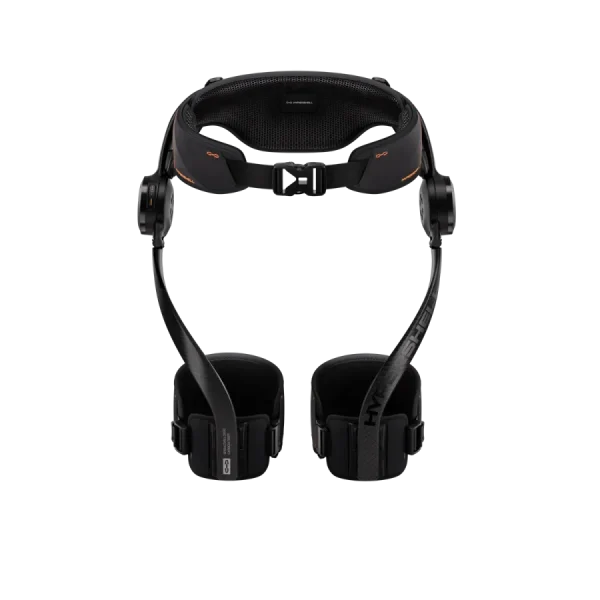
Hypershell X Max S
- The cheapest 1,000 W model in the S series
- 18.6 miles on one battery
- Free shipping from a US warehouse
A strong motor on the newest platform, but it costs $100 more than the X Ultra and ships with one 18.6-mile battery instead of two. Choose it only if you want the S series platform and its HyperIntuition AI.Our score Our score breakdownAssist power9.5Real-world range9.0Weight and comfort8.5Value for money7.5Warranty and support9.5 -
5. The most peak power
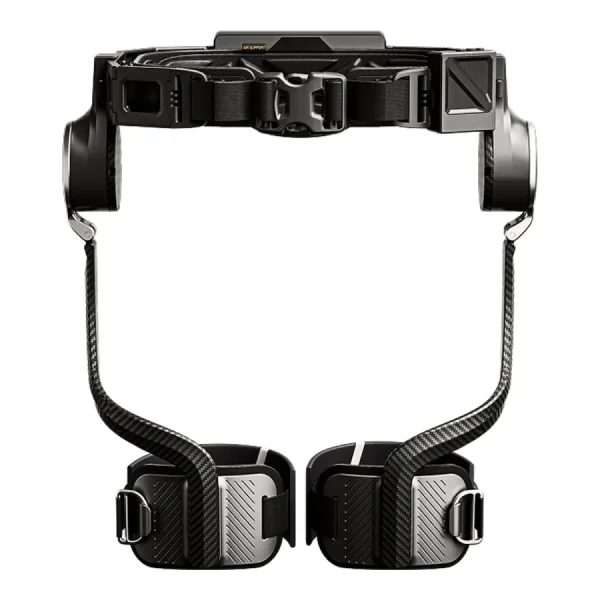
Ascentiz H Ultra
- 1,100 W peak
- Two batteries in the box
- 16 recognized movements
1,100 W peak and two batteries in the box: 100 W above the 1,000 W Hypershells. Main drawback: the X Ultra costs $300 less and offers 37.3 miles of range against 31.1, from a brand that scores higher for support in our grid.Our score Our score breakdownAssist power9.5Real-world range9.5Weight and comfort9.0Value for money7.0Warranty and support7.0 -
6. The cheapest 1,000 W
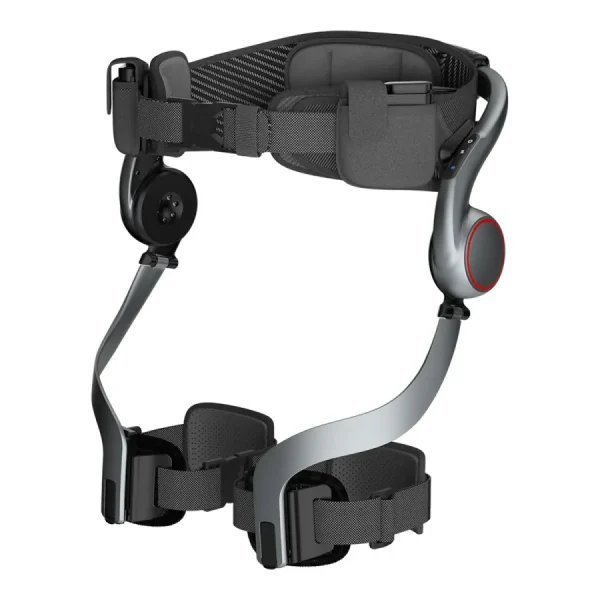
AstroShell Alpha 1
- 1,000 W peak at the lowest price
- Two batteries in the box
- 5.3 lb with both batteries on board
With 1,000 W peak, two batteries and 5.3 lb, the Alpha 1 brings top-tier power at a mid-range price. Main drawback: 14.9 miles in total, spare battery included; the X Ultra goes much further for $200 more.Our score Our score breakdownAssist power9.5Real-world range8.0Weight and comfort9.0Value for money8.0Warranty and support7.0 -
7. The lowest price
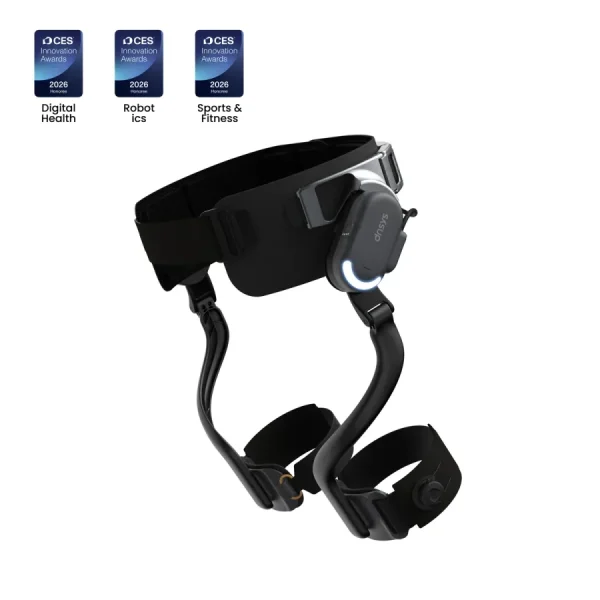
Dnsys X1
- 900 W peak and 40 N·m of torque
- The least expensive motor above 800 W
- The lightest hip model in our comparison
A credible but rougher alternative: 900 W and 40 N·m for $110 less than the Hypershell X Carbon. Range and strap comfort fall behind Hypershell, and it ships with one battery. Consider it when price is the deciding factor.Our score Our score breakdownAssist power9.0Real-world range7.0Weight and comfort9.0Value for money9.0Warranty and support7.0 -
8. The modular 1,000 W
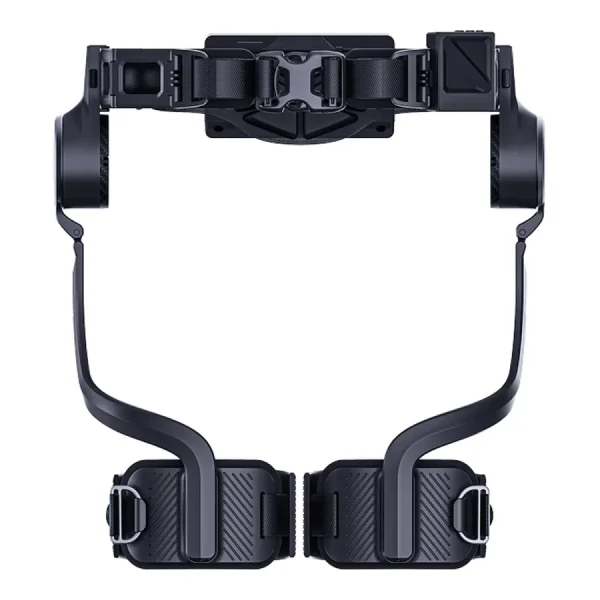
Ascentiz H Pro
- 1,000 W peak
- Comfortable and quick to put on
- Modular belt
1,000 W, a comfortable harness that goes on quickly, and a modular belt, with a knee module in development. Main drawback: one 15.5-mile battery, when the X Ultra costs just $100 more and brings 37.3 miles.Our score Our score breakdownAssist power9.0Real-world range8.5Weight and comfort9.0Value for money7.5Warranty and support7.0 -
9. S series entry point
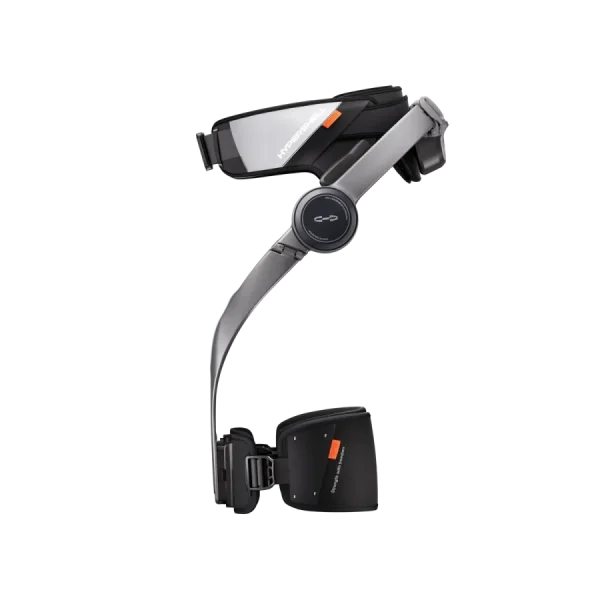
Hypershell X Pro S
- Lowest price in the S series
- HyperIntuition AI
- Free shipping from a US warehouse
The cheapest way into Hypershell’s new S series: 800 W, 10 modes and the HyperIntuition AI. Main drawback: one 10.9-mile battery, when the X Carbon gives you two for the same price.Our score Our score breakdownAssist power9.0Real-world range7.0Weight and comfort8.5Value for money7.5Warranty and support9.5
Editorial and user score scale: from < 5 to 10 · amber is reserved for the user score
Our ranking of the best exoskeletons
The nine models below are in the order of our score. When two models show the same score, the exact score before rounding breaks the tie. The Hypershell S series and the Ascentiz models are all recent, and they take their place like the others: the score judges the product against the market, not its age.
Our scores rest on verified spec sheets and owner reports, not on lab measurements of our own (see our methodology). We may earn a commission on purchases made through our links, at no cost to you (see our affiliate disclosure). Two special cases stay out of the ranking: the Hypershell Halo, a hip-and-knee preorder, and the Dnsys Z1, a knee-only model. Both are covered further down.
Our No. 1
Hypershell X Ultra
Two 18.6-mile batteries and 1,000 W, the longest range on this page, tied with the X Ultra S, for $1,399 (price checked on Oct 1, 2026).
It combines what the others split between them: 1,000 W, two 18.6-mile batteries and 12 modes, snow and sand included. It matches the X Ultra S on those points for $600 less. Main reservation: it costs $400 more than the X Carbon, which is plenty for a day out.
Pros
- Two 18.6-mile batteries: 37.3 miles in the box, the best on this page, tied with the X Ultra S
- 1,000 W and 12 modes, snow and sand included
- 5.5 lb with a battery, as light as the 800 W X Carbon
- Free shipping from a US warehouse, in about 8 business days (contiguous US)
Cons
- $1,399 (checked Oct 1, 2026): $400 more than the X Carbon, which also ships two batteries
- No wall charger in the box, only a USB-C cable
Who it's for
Anyone heading far from an outlet: multi-day treks, alpine routes, heavy packs on repeated climbs.
Who it's not for
The buyer who picks the top model just in case: they pay $400 for a reserve they may never use.
Our detailed review
The X Ultra pushes the current Hypershell platform to its limit: 1,000 watts (W) of peak power, 12 modes and two 18.6-mile batteries, on a carbon frame certified by SGS, a testing and certification company. That margin should matter where an 800 W model has less in reserve: steep climbs, repeated, with a heavy pack.
Range figures assume moderate assist on easy ground. With strong assist and a loaded pack, expect a third to a half less per battery, and two batteries cover that gap. It also earns our top value score: it costs $100 less than the X Max S, which ships one battery, and $600 less than the X Ultra S, which has the same power and range.
Take it if…
Your terrain is steep, your pack heavy and your outings long. For everything else, the X Carbon’s 800 W is probably enough, for $400 less.
Technical specs
| Motor power | 1,000 W peak, 16.2 lb-ft (22 N·m) |
|---|---|
| Weight | 5.5 lb (2.5 kg), battery included |
| Battery range | 18.6 mi (30 km) per battery |
| Batteries in the box | 2 batteries, 37.3 mi (60 km) combined |
| Modes | 12 modes, including snow and sand |
| App | iOS and Android, MotionEngine AI |
| Water resistance | IP54 |
$1,399
BuyThe newest platform
Hypershell X Ultra S
HyperIntuition AI, 1,000 W and two 18.6-mile batteries: the flagship of the S series, at $1,999 (price checked on Oct 1, 2026).
It adds to the X Ultra what that model lacks: Hypershell’s newest control AI, HyperIntuition, and a 65 W wall charger, for $600 more. Power, range and weight stay the same. Worth it only if you want the latest Hypershell platform.
Pros
- HyperIntuition control AI, the most recent from Hypershell
- Two 18.6-mile batteries: 37.3 miles in the box, tied with the X Ultra
- 65 W wall charger included, where the X Ultra comes with a cable only
Cons
- $1,999 (checked Oct 1, 2026): $600 more than the X Ultra, at the same power and range
Who it's for
The buyer who wants the newest Hypershell platform and plans to keep the exoskeleton for several seasons.
Who it's not for
The tight comparer: the X Ultra gives the same 37.3 miles for $600 less.
Our detailed review
The X Ultra S keeps everything that makes the X Ultra what it is: 1,000 W, 12 modes, two 18.6-mile batteries and 5.6 lb with a battery. What it adds is electronics: the new HyperIntuition control AI and a 65 W wall charger in the box.
At a $600 gap, the question is simple: do you want the brand’s latest platform? If yes, this is the one. If not, the X Ultra covers the same ground. The S series is also recent, with fewer owner reports than the older models.
The choice for the latest generation
You are buying for several seasons and want the most recent Hypershell AI: this is the model to aim for. For the same endurance at the best price, the X Ultra stays ahead.
Technical specs
| Motor power | 1,000 W peak |
|---|---|
| Weight | 5.6 lb (2.5 kg), battery included |
| Battery range | 18.6 mi (30 km) per battery |
| Batteries in the box | 2 batteries, 37.3 mi (60 km) combined |
| Modes | 12 modes |
| App | iOS and Android, HyperIntuition AI |
| Water resistance | IP54, -4 °F to 140 °F (-20 °C to 60 °C) |
$1,999
BuyTwo batteries under $1,000
Hypershell X Carbon
800 W, two batteries and a carbon frame for $999 (price checked on Oct 1, 2026): the price of the X Pro S, which has one battery.
It is the cheapest Hypershell with two batteries in the box, and it costs the same as the one-battery X Pro S. You give up 200 W against the X Ultra, which costs $400 more. A GORE-TEX outer fabric and titanium hip levers come with it.
Pros
- Two 10.9-mile batteries in the box for $999, where the X Pro S at the same price has one
- Carbon frame, GORE-TEX outer fabric and titanium hip levers, the most refined finish in the Hypershell lineup
- 800 W and 10 modes at 5.5 lb with a battery, as light as the X Ultra
- Free shipping from a US warehouse, in about 8 business days
Cons
- 200 W and about 15 miles less than the X Ultra, which costs $400 more
- Few owner reports of its own: most feedback comes from the X Pro, which shares its motor and batteries
Who it's for
The buyer who wants two batteries without paying $1,399, and the hiker who goes out in rain and cold.
Who it's not for
Anyone who needs 1,000 W: the X Ultra adds 200 W and about 15 more miles for $400 more.
Our detailed review
The X Carbon is where price and range meet at Hypershell. Two 72 watt-hour (Wh) batteries, 10.9 miles each, ship in the box. The X Pro S at the same price ships one, and no other ranked model under $1,000 ships two.
Its outer fabric is GORE-TEX and its hip levers are titanium, details that matter in rain and cold. At $400 under the X Ultra, it is our default pick when budget counts.
Who the X Carbon is for
A hiker who wants two batteries and a solid build under $1,000. If you climb steeply with a heavy pack every week, step up to the X Ultra.
Technical specs
| Motor power | 800 W peak, 13.3 lb-ft (18 N·m), 2 motors |
|---|---|
| Weight | 5.5 lb (2.5 kg), battery included |
| Battery range | 10.9 mi (17.5 km) per battery |
| Batteries in the box | 2 batteries, 21.7 mi (35 km) combined |
| Modes | 10 modes, assist up to 12.4 mph (20 km/h) |
| App | iOS and Android, MotionEngine AI |
| Water resistance | IP54, -4 °F to 140 °F (-20 °C to 60 °C) |
$999
Buy1,000 W, one battery
Hypershell X Max S
1,000 W and one 18.6-mile battery for $1,499 (price checked on Oct 1, 2026): the S series power, at $100 more than the X Ultra.
It brings the X Ultra’s 1,000 W and 18.6-mile battery to the S platform, with one battery instead of two and no Boost mode, for $100 more. That is why it ranks behind the X Ultra. Its case: the S series AI for $500 less than the X Ultra S.
Pros
- 1,000 W and 18.6 miles per battery, the X Ultra’s figures
- HyperIntuition AI, from the newer S series
- $500 under the X Ultra S for the same peak power
Cons
- $100 more than the X Ultra, which ships two batteries
- One battery in the box, no Boost mode, and operation down to 14 °F instead of -4 °F
Who it's for
The buyer who wants 1,000 W and the S series AI without paying $1,999, and who recharges every night.
Who it's not for
Anyone who can choose freely: the X Ultra ships two batteries and costs $100 less.
Our detailed review
The X Max S is the S series 1,000 W model, minus what costs money: one battery, no Boost mode, and a lower cold limit (14 °F instead of -4 °F). Its 1,000 W and 18.6 miles per battery are top-tier figures.
Here is the catch in the US: at $1,499 (price checked on Oct 1, 2026), it costs $100 more than the X Ultra, which ships two batteries. It earns its rank only if you prefer the S platform to the X Ultra.
A fit if you recharge every night
Day outings, a nightly charge and a taste for the S series AI: this is your model. If you hike several days in a row, the X Ultra’s second battery is worth more than the AI.
Technical specs
| Motor power | 1,000 W peak |
|---|---|
| Weight | 5.7 lb (2.6 kg), battery included |
| Battery range | 18.6 mi (30 km) per battery |
| Batteries in the box | 1 battery |
| Modes | 10 modes |
| App | iOS and Android, HyperIntuition AI |
| Water resistance | IP54, 14 °F to 140 °F (-10 °C to 60 °C) |
$1,499
BuyThe most peak power
Ascentiz H Ultra
1,100 W peak and two batteries for $1,699 (price checked on Oct 1, 2026): the highest peak power of this ranking, 100 W above the X Ultra.
100 W more peak power than the Hypershell X Ultra, two batteries in the box and the same weight: it has the makings of a top-tier model. Main reservation: the X Ultra goes 6.2 miles farther for $300 less.
Pros
- 1,100 W peak, 100 W above the X Ultra and X Ultra S
- Two batteries in the box: 31.1 miles combined
- 5.5 lb with a battery, on a titanium and carbon frame
- Ships from a US warehouse in 2 to 7 business days
Cons
- 6.2 miles less than the X Ultra, which costs $300 less
- No wall charger in the box: the 65-minute recharge needs a 100 W USB-C charger
- Support still to prove: a newer brand with a 12-month warranty
Who it's for
The buyer who wants the highest peak power in the ranking and two batteries from day one, for sustained climbing.
Who it's not for
Anyone counting miles: the X Ultra goes 6.2 miles farther for $300 less, and scores higher for support in our grid.
Our detailed review
Ascentiz, a Hong Kong brand that came through Kickstarter and then the CES and IFA 2026 shows, sells the H Ultra from a US warehouse. Its 1,100 W peak is the highest figure in this ranking, with two 75.6 Wh batteries and 16 recognized movements, from cycling to stairs.
Against the X Ultra, you get 100 W more and 6.2 fewer miles, for $300 more. Against the X Ultra S, you pay $300 less for the same trade. Plan on a 100 W USB-C charger, which is not in the box.
For buyers who want watts first
If peak power decides your purchase, this is the one. If what you need is reserve for several days, the X Ultra, $300 less, goes further.
Technical specs
| Motor power | 1,100 W peak, 17.7 lb-ft (24 N·m) per motor, 2 motors |
|---|---|
| Weight | 5.5 lb (2.5 kg), battery and comfort kit included |
| Battery range | 15.5 mi (25 km) per battery |
| Batteries in the box | 2 batteries, 31.1 mi (50 km) combined |
| Modes | 16 recognized movements, assist up to 17.4 mph (28 km/h) |
| App | Ascentiz app, adaptive AI assist |
| Water resistance | IP54, -4 °F to 140 °F (-20 °C to 60 °C) |
$1,699
BuyThe cheapest 1,000 W
AstroShell Alpha 1
1,000 W, two swappable batteries and 5.3 lb for $1,199 on AstroShell's own site (price checked on Oct 1, 2026).
The cheapest 1,000 W on this page, with two batteries and a 5.3 lb weight, from a Florida-based brand. Main reservation: 14.9 miles in total, spare battery included, where the X Ultra more than doubles the range for $200 more.
Pros
- 1,000 W and 40 N·m (newton-meters) of continuous torque, at the lowest price for that power
- Two batteries, swappable without cutting the assist
- 5.3 lb with both batteries on board, thanks to a magnesium alloy frame
- Owners report easier climbs: the effort stays yours, but they arrive with lighter legs
Cons
- 14.9 miles in total, 7.5 per battery; expect half with strong assist
- Quality control raises questions: a few owners received an incomplete unit, and one got no answer from support
Who it's for
The buyer who wants 1,000 W at the lowest price and swaps batteries on the move.
Who it's not for
Anyone who walks all day: 14.9 miles in total, and about half of that with strong assist.
Our detailed review
AstroShell, a Florida brand, offers the Alpha 1 with 1,000 W peak, 40 N·m of torque and two batteries at a mid-range price. A magnesium alloy frame keeps it at 5.3 lb with both batteries on board, a little lighter than the X Carbon.
Its limits are range and consistency. Each battery is good for 7.5 miles, and some owner reviews we read mention a unit that arrived incomplete. AstroShell also sells the Alpha 1 on Amazon, where the price can differ: compare both listings before you buy.
Who gets the most from the Alpha 1
You want 1,000 W without paying X Ultra money, and your outings are short. For a full day out, the X Ultra’s 37.3 miles are $200 away.
Technical specs
| Motor power | 1,000 W peak, 29.5 lb-ft (40 N·m) continuous torque |
|---|---|
| Weight | 5.3 lb (2.4 kg) with both batteries, 4.4 lb (2 kg) without |
| Battery range | 7.5 mi (12 km) per battery |
| Batteries in the box | 2 batteries, 14.9 mi (24 km) combined |
| Modes | 3 modes (smart, transparent, fitness), 12 recognized movements, assist up to 13.7 mph (22 km/h) |
| App | iOS and Android, adaptive AI assist |
| Water resistance | IP54, -4 °F to 140 °F (-20 °C to 60 °C) |
$1,199
BuyThe lowest price
Dnsys X1
The lowest price on this page: $889 for the X1 Carbon, $689 for the Lite (prices checked on Oct 1, 2026), with 900 W peak.
The entry ticket of this page: $110 under the Hypershell X Carbon, 900 W peak and a battery you swap in seconds. Main reservation: one 9.3-mile battery, straps that ride up and a lower support score than Hypershell in our grid.
Pros
- The lowest price on this page: $889 for the X1 Carbon, $689 for the Lite
- 900 W peak and 40 N·m of torque, a firm push uphill
- The lightest model here: 4.9 lb with its battery
- Battery swapped in seconds, with no tools
Cons
- Short real-world range: about half the battery gone in 90 minutes at the maximum setting
- Straps that ride up, and a belt that makes you sweat
- Support scores 7 in our grid, against 9.5 for Hypershell
Who it's for
The buyer who wants to spend the least and keeps outings short.
Who it's not for
Anyone who wants all-day comfort: the straps are the weak point, and the range is short.
Our detailed review
On price, the Dnsys X1 wins: $889 for the X1 Carbon, the version we rank, and $689 for the X1 Lite (prices checked on Oct 1, 2026), for 900 W peak and 40 N·m of torque. Dnsys ships from a Los Angeles warehouse in 3 to 7 business days.
Real-world use tempers that start. It drains about half its battery in 90 minutes at the maximum setting, its thigh straps ride up and the belt makes you sweat. On a short outing none of that is a deal-breaker; on a long one, the X Carbon, $110 more, ships two batteries.
The right buyer for the X1
The budget-first hiker with short outings: the price gap is a real argument. Anyone planning long days will be happier with a second battery.
Technical specs
| Motor power | DNA-1 motor, 900 W peak, 29.5 lb-ft (40 N·m) |
|---|---|
| Weight | 4.9 lb (2.2 kg), battery included; 3.5 lb (1.6 kg) without |
| Battery range | 9.3 mi (15 km) per battery |
| Batteries in the box | 1 battery, 2,400 mAh, swappable |
| Modes | Continuous adjustment in the app |
| App | iOS and Android |
| Water resistance | IP54 |
$889
BuyThe modular 1,000 W
Ascentiz H Pro
1,000 W, one 15.5-mile battery and a modular belt for $1,299 (price checked on Oct 1, 2026): $200 under the X Max S.
It offers the same 1,000 W as the X Max S, a modular belt and a harness that goes on fast, for $200 less. Main reservation: 15.5 miles against 18.6, from a brand whose support is still unproven.
Pros
- 1,000 W peak, as much as the top Hypershell models
- Comfortable and quick to put on, a point owner reviews often mention
- Modular belt, with a knee module in development according to Ascentiz
- Ships from a US warehouse in 2 to 7 business days
Cons
- One 15.5-mile battery and no wall charger (cable only)
- Assist feels less firm than on the Hypershells, despite equivalent watts
- Support still to prove: a 12-month warranty and a newer brand
Who it's for
The hiker who puts comfort first: a quick-fit harness, 1,000 W, outings of up to a day.
Who it's not for
Anyone who wants the most miles for the money: the X Ultra ships two batteries for $100 more.
Our detailed review
The H Pro is the one-battery version of the Ascentiz range: 1,000 W peak, 15.5 miles and 5.6 lb with a battery, on the same modular belt as the H Ultra. Its harness is comfortable and goes on fast; its assist, according to owner reports, feels less firm than a Hypershell’s.
At $1,299 (price checked on Oct 1, 2026), it costs $200 less than the X Max S and gives 3.1 fewer miles per battery. The X Ultra, for $100 more, ships two batteries and 37.3 miles.
A fit if comfort comes first
You care about how it sits on your body and want a modular belt: it deserves a look. If you simply want the most miles for the money, the X Ultra goes further.
Technical specs
| Motor power | 1,000 W peak, 16.2 lb-ft (22 N·m) per motor, 2 motors |
|---|---|
| Weight | 5.6 lb (2.55 kg), battery and comfort kit included |
| Battery range | 15.5 mi (25 km), one 75.6 Wh battery |
| Batteries in the box | 1 battery |
| Modes | 12 recognized movements, assist up to 15.5 mph (25 km/h) |
| App | Ascentiz app, adaptive AI assist |
| Water resistance | IP54, -4 °F to 140 °F (-20 °C to 60 °C) |
$1,299
BuyS series entry point
Hypershell X Pro S
The newest Hypershell platform at the lowest S series price: $999 (price checked on Oct 1, 2026), the same as the X Carbon.
800 W and 10 modes with the new HyperIntuition AI and a wall charger in the box. Its weak point: one 10.9-mile battery, where the X Carbon ships two for the same price.
Pros
- 800 W and 10 modes, the X Carbon’s power
- HyperIntuition AI and a 65 W wall charger in the box
- The lowest S series price, $500 under the X Max S
Cons
- One 10.9-mile battery, against two on the X Carbon at the same price
- 85 g (0.2 lb) heavier than the X Carbon, at 5.7 lb with a battery
Who it's for
The buyer who wants the latest Hypershell platform at its lowest price and charges every night.
Who it's not for
The day hiker on a budget: the X Carbon ships two batteries at the same price.
Our detailed review
The X Pro S takes the same 800 W and 10 modes as the X Carbon and puts them on the S platform, with its new control AI. In exchange, it ships one battery and weighs 85 g more.
Its rank comes down to one calculation: at the same price, the X Carbon offers the same assist and a second battery. The X Pro S keeps the newest platform, its AI and a wall charger, a real plus if you plan to keep it for years.
For the S series at its lowest price
You want the latest generation without going over $1,000: this is the way in. If range matters more, the X Carbon is the better buy.
Technical specs
| Motor power | 800 W peak |
|---|---|
| Weight | 5.7 lb (2.6 kg), battery included |
| Battery range | 10.9 mi (17.5 km) per battery |
| Batteries in the box | 1 battery |
| Modes | 10 modes |
| App | iOS and Android, HyperIntuition AI |
| Water resistance | IP54, 14 °F to 140 °F (-10 °C to 60 °C) |
$999
BuyComparison table of the 9 best exoskeletons
Prices are indicative and were checked on Oct 1, 2026.
Prices checked on 10/01/2026
Swipe the table to see all columns →
| Product | Motor power | Weight | Battery range | Batteries in the box | Modes | App | Price | Score |
|---|---|---|---|---|---|---|---|---|
| Hypershell X Ultra Our pick | 1,000 W | 5.5 lb | 18.6 mi | 2 batteries | 12 modes | App + AI | $1,399 at Hypershell | 9.6 |
| Hypershell X Ultra S | 1,000 W | 5.6 lb | 18.6 mi | 2 batteries | 12 modes | App + AI | $1,999 at Hypershell | 9.0 |
| Hypershell X Carbon | 800 W | 5.5 lb | 10.9 mi | 2 batteries | 10 modes | App + AI | $999 at Hypershell | 9.0 |
| Hypershell X Max S | 1,000 W | 5.7 lb | 18.6 mi | 1 battery | 10 modes | App + AI | $1,499 at Hypershell | 8.8 |
| Ascentiz H Ultra | 1,100 W | 5.5 lb | 15.5 mi | 2 batteries | 16 movements | App + AI | $1,699 at Ascentiz | 8.5 |
| AstroShell Alpha 1 | 1,000 W | 5.3 lb | 7.5 mi | 2 batteries | 3 modes | App + AI | $1,199 at AstroShell | 8.4 |
| Dnsys X1 | 900 W | 4.9 lb | 9.3 mi | 1 battery | In-app | App | $889 at Dnsys | 8.3 |
| Ascentiz H Pro | 1,000 W | 5.6 lb | 15.5 mi | 1 battery | 12 movements | App + AI | $1,299 at Ascentiz | 8.3 |
| Hypershell X Pro S | 800 W | 5.7 lb | 10.9 mi | 1 battery | 10 modes | App + AI | $999 at Hypershell | 8.3 |
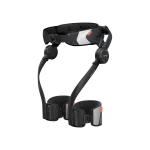
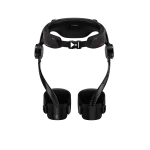
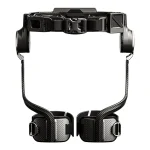
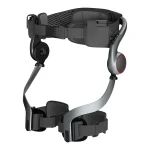
Which exoskeleton should you pick for your profile?
Start with what matters most to you; the table gives the pick and the verified fact behind it. Prices were checked on Oct 1, 2026.
| What matters most | Our pick | Why this one |
|---|---|---|
| 🏆 Best all-round | Hypershell X Ultra | 1,000 W and two 18.6-mile batteries, for $100 less than the X Max S, which has one battery |
| 💵 Two batteries on a budget | Hypershell X Carbon | Two batteries for $999 (Oct 1, 2026), the price of the one-battery X Pro S |
| 🌧️ Rain and cold | Hypershell X Carbon | GORE-TEX outer fabric and titanium hip levers, in a 5.5 lb package |
| 🆕 Newest Hypershell platform | Hypershell X Ultra S | Adds HyperIntuition AI and a 65 W wall charger to the X Ultra’s power and range, for $600 more |
| ⚡ Highest peak power | Ascentiz H Ultra | 1,100 W peak, 100 W above the X Ultra and X Ultra S, with two batteries |
| 💵 Cheapest 1,000 W | AstroShell Alpha 1 | $1,199 on AstroShell’s site (Oct 1, 2026), $200 under the X Ultra, with 14.9 miles of range in total |
| 💵 Lowest price overall | Dnsys X1 | $889 for the X1 Carbon and $689 for the Lite (Oct 1, 2026), with 900 W peak |
| 🥾 1,000 W and S series AI, one battery | Hypershell X Max S | 1,000 W on an 18.6-mile battery, $500 under the X Ultra S |
| 🧩 Comfort and a modular belt | Ascentiz H Pro | A quick-fit harness and 1,000 W, $200 under the X Max S |
| 💵 Lowest S series price | Hypershell X Pro S | $999 (Oct 1, 2026) for 800 W, HyperIntuition AI and a wall charger, with one battery |
Find yourself in the list below, and your model is next to it:
- Curious weekend hiker (a few hikes a year): the X Carbon is the safest first buy, with two batteries and 800 W. Not sure yet? The Dnsys X1 is the lowest price of the ranking.
- Regular hiker (climbing and carrying every week): the X Carbon if you want value, the X Ultra if you want the full reserve.
- Loaded mountain hiker (big climbs, heavy pack, long days): the X Ultra and its 1,000 W bring the margin an 800 W model lacks on that terrain.
- All-weather walker (rain, mud, winter): the X Carbon and its GORE-TEX outer fabric.
- Long-haul trekker (multi-day, self-sufficient): the X Ultra or the X Ultra S, two 18.6-mile batteries each; the S adds the latest AI for $600 more.
- Watt chaser (peak power above all): the Ascentiz H Ultra, 1,100 W and two batteries; the X Ultra goes 6.2 miles farther for $300 less.
- Day hiker who wants 1,000 W on the S platform: the X Max S, with one battery, for those who recharge every night.
- Comfort-minded hiker (short to day outings): the Ascentiz H Pro, 1,000 W and a quick-fit harness on a modular belt.
- Newness fan on a tight budget: the X Pro S, the S series under $1,000, knowing it ships one battery.
- 1,000 W for less: the AstroShell Alpha 1, with short range and a quality-control question mark.
- Need daily walking help, for you or a loved one: these sports exoskeletons are not the right answer. Talk to a doctor or a physical therapist first; our walking exoskeleton guide sorts out the options.
No profile fits? Start from the criteria in our guide on how to choose an exoskeleton: range, comfort and budget settle almost every case.
Powered or passive exoskeleton: which one should you choose?
Everything in our ranking is a powered exoskeleton: motors, a battery and electronics add energy to your stride. A second family, the passive ones, has no motor at all: springs, elastic bands or struts store the energy of one movement and give it back in the next. They do not play in the same category, and the right choice depends on what you ask of them.
| Powered (motors) | Passive (springs) | |
|---|---|---|
| What it brings | A real push, mostly uphill | Relief, mostly in static postures or going downhill |
| Battery | To recharge, with limited range | None: it works without end |
| Weight | 4.9 to 5.7 lb with a battery for the ranked models | Often under 4.4 lb (2 kg) |
| Upkeep | Electronics, app updates, support | Almost none |
| Budget | $689 to $2,299 (prices checked on Oct 1, 2026) | Generally cheaper than powered models |
Choose a powered one if your problem is effort: climbs that tire your legs, a heavy pack, fatigue that cuts outings short. That is the profile of every model ranked above. Choose a passive one if your problem is sustained strain without big dynamic effort: a worker or a gardener who stays bent over, for instance, with a spring-loaded back support. A rule of thumb if you still hesitate: battery = push, spring = support.
What about other brands? Our watch list
The market moves fast, and crowdfunding campaigns make a lot of noise. Here is what our watch list shows, and why these products are not (yet) in the ranking:
- Hypershell Halo: presented at IFA 2026, the first consumer exoskeleton to motorize the hip AND the knee, with four motors. $2,299 as a preorder, shipping late November 2026 (price checked on Oct 1, 2026). A preorder cannot take a spot in our ranking: read our Halo review.
- Dnsys Z1 (knee): available now in the US, shipped from Los Angeles in 3 to 7 business days. It assists the knee, not the hip, a different use: it has its own review.
- Hypershell X Pro and X Go: not available in Hypershell’s US store as of Oct 1, 2026, so we do not rank them.
- Vastnaut One (four motors, $9.9 million raised): the campaign is over, but we found no regular store when we last checked (Aug 29, 2026). Too early.
- Skip MO/GO (the Arc’teryx pants): about $5,000 (as of Aug 29, 2026), sold in the US and Canada only, with delivery planned for summer 2027. Fascinating, and not shipping yet.
- No-name generics on Amazon and AliExpress: we do not cite them until the maker can be identified. An unknown exoskeleton at $300 is not a bargain, it is a lottery.
We follow the brands on this list: a model that becomes verifiable and shippable in the US joins the ranking.
How to choose an exoskeleton: the criteria that really matter
Real-world range first, because it is the most misleading criterion. Spec-sheet miles are measured at moderate assist on easy ground; in sustained use, expect a third to a half less. So look less at the figure than at how many batteries ship in the box (two on the X Ultra, X Ultra S, X Carbon, Ascentiz H Ultra and AstroShell Alpha 1; one on the others) and at how you recharge: Hypershell’s USB-C charging plugs into almost anything, including a trail power bank.
Comfort next. An exoskeleton sits tight against your pelvis and thighs for hours, so rubbing straps, a sweaty belt and how the shorts stay put become very concrete issues. That is where the models differ most: owner reports criticize the straps of the Dnsys X1 more than the others. Check the size ranges too: waist and thigh measurements are given by each maker, and a poorly fitted device loses most of its point. Our guide on how to choose an exoskeleton goes deeper.
The buying route last, often overlooked and often decisive. Hypershell ships free from a US warehouse in about 8 business days (contiguous US), Dnsys from Los Angeles in 3 to 7, Ascentiz from a US warehouse in 2 to 7: no import duties at your door. AstroShell is a Florida brand. Check the return policy and the support contact before you pay, and if you ever get the chance to try one on, start there: no table, ours included, replaces twenty minutes of assisted walking.
Size guide: check before you order
A poorly fitted exoskeleton loses most of its point and rubs where it should not. Before ordering, take two measurements: your waist (at the pelvis, where the belt sits) and your thigh length. Here are the makers’ adjustment ranges:
| Model | Waist | Thigh length | Sizes |
|---|---|---|---|
| Hypershell X Carbon and X Ultra | 28.3 to 48 in (72 to 122 cm) | 14.2 to 19.7 in (36 to 50 cm) | One adjustable size |
| Hypershell S series (X Pro S, X Max S, X Ultra S) | Not published yet | Not published | Not published |
| Dnsys X1 | S: 27.6 to 35.4 in (70 to 90 cm) · M: 33.5 to 43.3 in (85 to 110 cm) · L: 41.3 to 49.2 in (105 to 125 cm) | Not published | 3 sizes to choose from |
| Ascentiz H Pro and H Ultra | 25.6 to 57.1 in (65 to 145 cm) | Not published | One adjustable size, S, M and L leg strap extensions included |
| AstroShell Alpha 1 | Not published | Not published | One size, for heights from 4 ft 11 in to 6 ft 3 in (150 to 190 cm) |
- Between two Dnsys sizes? Take the larger: straps tighten better than they lengthen.
- Maximum user weight: almost no maker publishes it. The only exception we found is the Dnsys Z1 (knee), rated for 88 to 269 lb (40 to 122 kg). For the others, ask the support team before you buy if you are in doubt.
- Think about clothing: the ranges are measured over thin clothes; in winter gear, add an inch or so.
What an exoskeleton really changes
Three takeaways come out of this comparison, drawn from spec sheets and owner reports. Owners of Hypershell models describe a firm push uphill, so firm that it takes the effort away from anyone who wants to train. Range melts under strong assist, whatever the brand. And the Dnsys X1 does assist, but owners report a shorter battery life and less comfort than on the Hypershells.
Let us be clear: this is not a sports performance tool. A hiking exoskeleton is designed to reduce muscle effort; it does not improve a trained athlete on easy ground. It lowers the entry step of elevation gain for people whom climbs slow down, and it eases carrying a pack. Those are the uses to buy it for, and no others.
How much does an exoskeleton cost in 2026?
For hiking, prices checked on Oct 1, 2026 run from $689 (Dnsys X1 Lite) to $1,999 (Hypershell X Ultra S), with the Hypershell Halo at $2,299 as a preorder. The useful middle of the market sits between $999 and $1,499. Hypershell’s old entry-level models, the X Go at $699 and the X Pro at $899, are not available in its US store. Beware of the sticker: brands run near-permanent promotions, so compare before you pay. Our tables show the checked price and its date, to be rechecked at purchase. The full breakdown is in our exoskeleton price guide.
Beyond hiking, the orders of magnitude change completely. Work exoskeletons (back, shoulders) are a separate market, mostly sold to businesses on quote: passive versions start in the hundreds of dollars, powered ones can cost thousands. Medical exoskeletons such as Wandercraft’s or ReWalk’s are not bought online: they go through clinics and prescriptions, and the FDA regulates them as medical devices. Wandercraft publishes no price.
When to buy an exoskeleton: the smart calendar
On this market the “sale” never ends: stores display spectacular crossed-out prices all the time. Our rule: never reason from a crossed-out price, only from the price actually shown, which we record and date. That said, some moments are objectively better:
- Generation launches: with the S series on sale, the classic X Carbon and X Ultra are the smart buys. The X Ultra gives the S series power and range for $600 less than the X Ultra S.
- Black Friday, Cyber Monday and the holidays (November and December): sports electronics brands concentrate their real discounts there. Compare with the dated price in our tables to tell a real discount from a marketing sticker.
- The end of the hiking season: demand drops and stocks empty before the spring novelties.
- Avoid ordering right before a trip: shipping alone takes about 8 business days from Hypershell, 3 to 7 from Dnsys and 2 to 7 from Ascentiz. Add fitting and getting used to it, and give yourself two or three weeks of margin before you leave.
So aim for a month before your first outing of the season.
Quick glossary: speak exoskeleton in 8 words
- Powered (active) exoskeleton: a worn structure whose motors add energy to the movement. Everything in our ranking belongs to it.
- Passive exoskeleton: a structure with no motor, with springs or elastic bands that give back stored energy. Generally cheaper, never to recharge.
- Torque (N·m): newton-meters, the twisting force the motor applies at the hip. It is what pushes your leg; the higher it is, the firmer the assist can be (22 N·m, about 16.2 lb-ft, on the Hypershell X Ultra).
- Power (W): watts, the rate at which the motors deliver energy. Useful within one range, misleading across brands: a powerful motor that is poorly controlled assists worse than a modest, well-synchronized one.
- Wh (watt-hour): battery capacity. The 72 Wh packs of the Hypershell X Carbon and the 75.6 Wh packs of Ascentiz sit under the 100 Wh limit generally allowed in carry-on bags.
- IP54: a protection rating against dust and water splashes. Trail rain and mud: yes. Immersion: no.
- Assist mode: a setting that adapts the push to the activity (walking, climbing, running). More useful than their number: how well the device detects your movement.
- Perceived offload: marketing wording (“up to 66 lb” at Hypershell) for the feeling of lightening. A manufacturer claim, not a standardized measurement: no standard governs it.
With these eight words, you can read any spec sheet without falling for the marketing.
What about knees?
Every model ranked here assists the hip: it reduces overall leg effort, especially uphill, which may indirectly limit the fatigue you feel. Hypershell claims up to 66 lb (30 kg) of perceived offload; that is a manufacturer claim, not a health promise. For motorized knee assistance, particularly downhill, look at knee exoskeletons like the Dnsys Z1 (900 W peak and energy recovery on descents, according to the brand, shipped from Los Angeles), covered in our detailed review, or at the hip-and-knee Hypershell Halo, a preorder shipping late November 2026. One reminder: these are sports and recreation equipment, not medical devices. With joint pain, the advice of a doctor or a physical therapist comes before any purchase.
Frequently asked questions
What is the best exoskeleton to start with?
For most people, the Hypershell X Ultra: $1,399 (price checked on Oct 1, 2026) for 1,000 W and two batteries, shipped free from a US warehouse. If that is too much, the X Carbon costs $400 less and still ships two batteries.
If budget is the priority, the Dnsys X1 starts at $689 for the Lite and $889 for the Carbon, with a shorter real-world range and a lower support score in our grid. Hypershell’s older X Pro and X Go are not available in its US store.
What is Hypershell's S series?
The brand’s new generation, launched in 2026: the X Pro S, the X Max S and the X Ultra S. It mainly brings a new control AI, HyperIntuition, and a wall charger in the box.
Weight stays at 5.6 to 5.7 lb with a battery, and only the X Ultra S ships two batteries. It takes second place in our ranking, which judges each product against the market.
Are the range figures from manufacturers reliable?
Treat them as a theoretical maximum. They are measured at moderate assist on easy ground; in sustained use, expect a third to a half less. That holds for every brand, which is why our range score starts from the spec-sheet miles and goes down when owner reports show less.
Can you fly with an exoskeleton?
The device itself travels like any sports gear. The question is the lithium batteries: the Hypershell X Carbon’s are 72 Wh and Ascentiz’s are 75.6 Wh, under the 100 Wh limit generally allowed in carry-on bags by the FAA and the TSA (Transportation Security Administration).
Lithium batteries go in the cabin, never in checked luggage, and each airline has its own rules. Check yours before you fly, especially if you carry two batteries.
Will Medicare or insurance pay for an exoskeleton?
Do not count on it. The models in this ranking are recreation products, not medical devices, so no reimbursement is planned for them. Medical exoskeletons exist, but they follow a clinical path (prescription, specialized clinics) and are regulated by the FDA (Food and Drug Administration).
If your need comes from a condition or a loss of mobility, talk to your doctor or a physical therapist before you buy anything.
Hypershell or Dnsys: which one should you choose?
Hypershell for peace of mind: two batteries on the X Carbon, X Ultra and X Ultra S, and a support score of 9.5 against 7 for Dnsys in our grid. Dnsys for the lowest price, if your outings stay short: the X1 Carbon is $110 under the X Carbon (prices checked on Oct 1, 2026), and Dnsys ships from Los Angeles in 3 to 7 business days.
Details are in our Hypershell X Carbon and Dnsys X1 reviews.
Ascentiz or Hypershell: which one should you choose?
Hypershell for range and a stronger support score: the X Ultra goes 37.3 miles against 31.1 for the Ascentiz H Ultra, for $300 less ($1,399 against $1,699). At one battery, the X Max S gives 18.6 miles against 15.5 for the H Pro, but costs $200 more ($1,499 against $1,299).
Ascentiz for peak power, 1,100 W on the H Ultra, and for a modular belt with a knee module in development. Both brands ship from US warehouses. Prices checked on Oct 1, 2026.

The Editorial Team
Comparative analysis of exoskeletons and mobility assistance
How we review
- Cross-checked French and English sources: published independent tests and feedback from real users.
- Verified specifications from several sources, with data normalized for easy comparison.
- No measurements of our own: manufacturer values are flagged as such.
- Prices and availability tracked regularly, rankings continuously updated.