Walking several miles in a day, running a full day of errands, staying on your feet from morning to night: hip exoskeletons are built to make all of that cost your legs less, and in 2026 six models you can buy in the US suit everyday walking. Our verdict: the Hypershell X Ultra is the best exoskeleton for walking every day, with the strongest motor of the six and two large batteries in the box. If it costs too much, the X Carbon is the one we would buy instead. Six models from $889 to $1,399 (prices checked Oct 1, 2026), and only one that assists the knee instead of the hip.
1 to 6 products · Updated 10/02/2026
-
1. Best for everyday walking
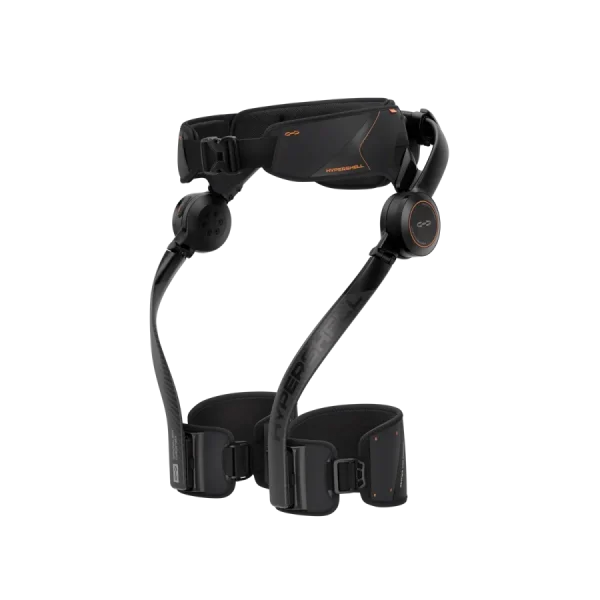
Hypershell X Ultra
- 1,000 W and 12 modes
- Two 18.6-mile batteries in the box
- SGS-certified carbon fiber frame
1,000 W and two 18.6-mile batteries for $600 less than the X Ultra S, which has the same power and range. It pays off on steep, repeated climbs and heavy loads; for lighter needs, the X Carbon costs $400 less.Our score Our score breakdownAssist power9.5Real-world range10.0Weight and comfort9.0Value for money10.0Warranty and support9.5 -
2. Best value, rain or shine
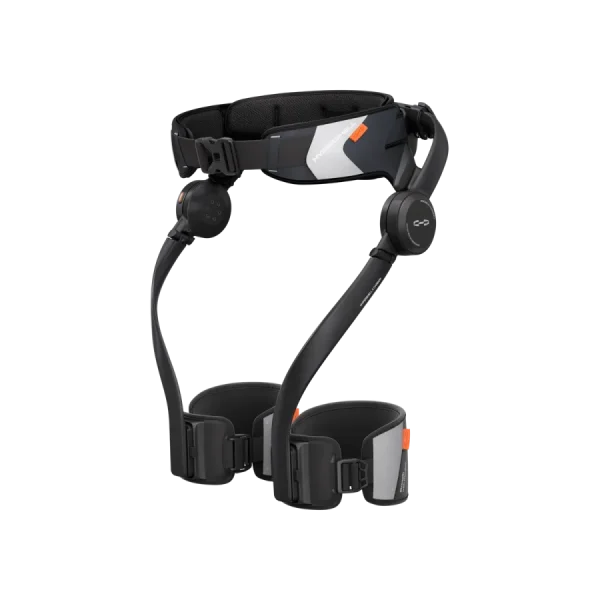
Hypershell X Carbon
- Two batteries for the price of the one-battery X Pro S
- GORE-TEX outer fabric and titanium hip levers
- Free shipping from a US warehouse
Two batteries, a carbon frame and GORE-TEX fabric for the price of the one-battery X Pro S. The X Ultra adds 1,000 W and 37.3 miles of range for $400 more, so it stays our top pick; the X Carbon is the smart step below it.Our score Our score breakdownAssist power9.0Real-world range8.5Weight and comfort9.0Value for money9.0Warranty and support9.5 -
3. Stairs and downhill
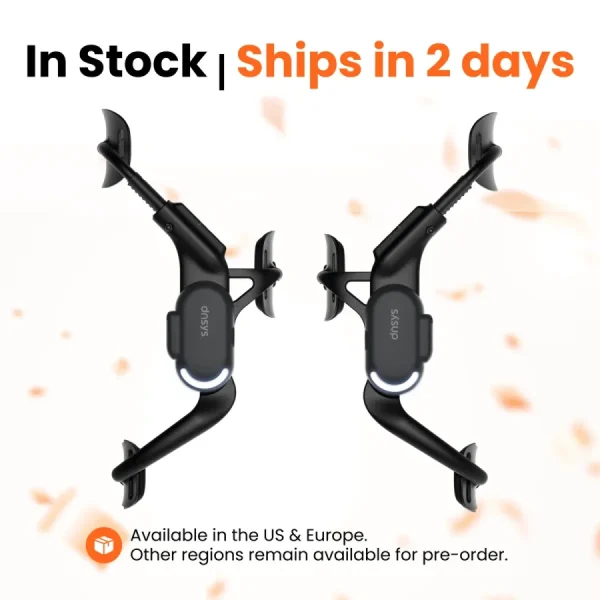
Dnsys Z1
- Built for the knee
- Energy recovery on descents
- Size range published in black and white
The most distinctive product in our comparison: where the others assist the hip, the Z1 assists the knee and recovers energy on descents. It is the only dedicated knee unit here, but the standard version has one battery and adds no push uphill.Our score Our score breakdownAssist power9.0Real-world range7.5Weight and comfort10.0Value for money8.5Warranty and support7.0 -
4. Cheapest 1,000 W model
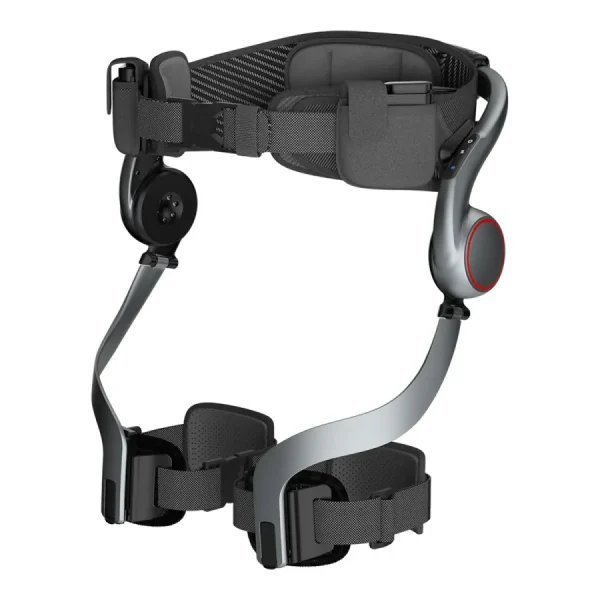
AstroShell Alpha 1
- 1,000 W peak at the lowest price
- Two batteries in the box
- 5.3 lb with both batteries on board
With 1,000 W peak, two batteries and 5.3 lb, the Alpha 1 brings top-tier power at a mid-range price. Main drawback: 14.9 miles in total, spare battery included; the X Ultra goes much further for $200 more.Our score Our score breakdownAssist power9.5Real-world range8.0Weight and comfort9.0Value for money8.0Warranty and support7.0 -
5. Lowest price here
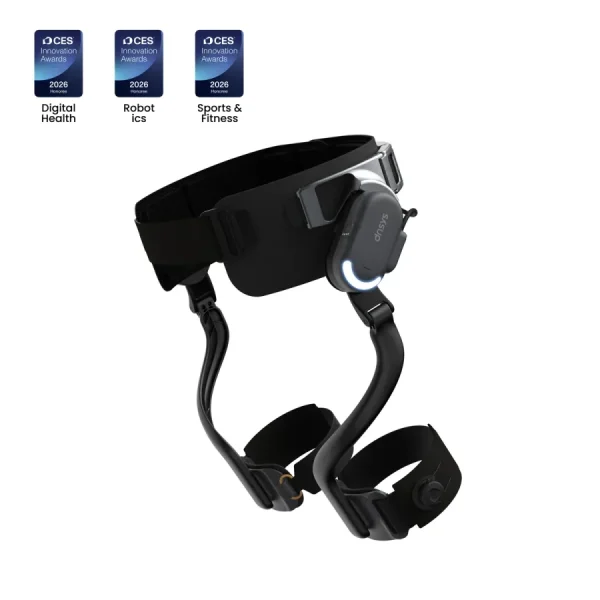
Dnsys X1
- 900 W peak and 40 N·m of torque
- The least expensive motor above 800 W
- The lightest hip model in our comparison
A credible but rougher alternative: 900 W and 40 N·m for $110 less than the Hypershell X Carbon. Range and strap comfort fall behind Hypershell, and it ships with one battery. Consider it when price is the deciding factor.Our score Our score breakdownAssist power9.0Real-world range7.0Weight and comfort9.0Value for money9.0Warranty and support7.0 -
6. Newest Hypershell series
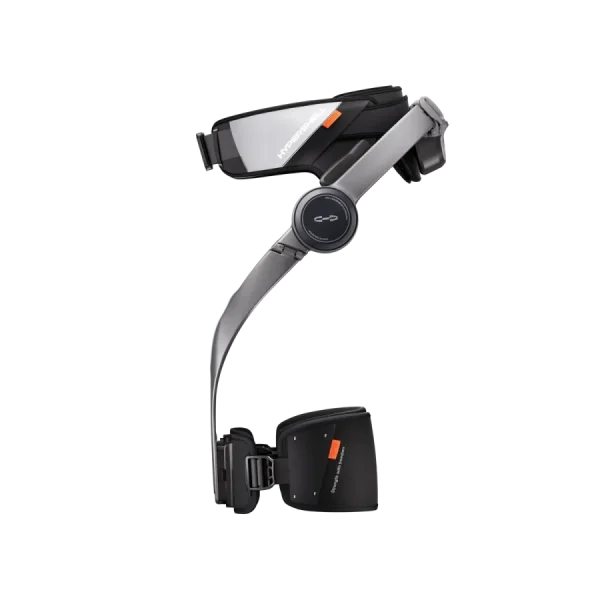
Hypershell X Pro S
- Lowest price in the S series
- HyperIntuition AI
- Free shipping from a US warehouse
The cheapest way into Hypershell’s new S series: 800 W, 10 modes and the HyperIntuition AI. Main drawback: one 10.9-mile battery, when the X Carbon gives you two for the same price.Our score Our score breakdownAssist power9.0Real-world range7.0Weight and comfort8.5Value for money7.5Warranty and support9.5
Editorial and user score scale: from < 5 to 10 · amber is reserved for the user score
The essentials in 30 seconds
- Best for everyday walking Hypershell X Ultra, Two 30 km (18.6 mi) batteries and a 1,000 W peak: a full day of walking without a recharge break ($1,399)
- Lowest price Dnsys X1, The lowest price here ($889 for the X1 Carbon, checked Oct 1, 2026), with a 900 W peak and a battery you swap in seconds ($889)
- Best value, rain or shine Hypershell X Carbon, Two batteries and a GORE-TEX outer fabric for $400 less than the X Ultra ($999)
- Stairs and downhill Dnsys Z1, The only knee model in this ranking, with energy recovery on the way down ($1,299)
Golden rule: A walking exoskeleton assists your hips or knees; it does not replace your legs. These are recreation products, not medical devices. If a health condition makes walking hard, the first step is a doctor or physical therapist, not a purchase.
Which exoskeleton fits the way you walk
On a spec sheet, these six devices all do the same thing. Over a real day, they differ a lot. We sort them on one criterion: what you do with your steps.
| How you walk | Our pick | Why this one |
|---|---|---|
| 🏙️ Short city trips (under an hour) | Dnsys X1 | The lowest price here, and 40 N·m of torque is plenty on flat ground |
| 🚶 Long days on your feet | Hypershell X Ultra | Two 18.6 mi (30 km) batteries in the box, 37.3 mi (60 km) combined: the most staying power of the six |
| ☔ Walks in the rain | Hypershell X Carbon | The only one in this comparison with a GORE-TEX outer fabric, plus two batteries |
| 🪜 Stairs and downhill | Dnsys Z1 | The only knee model in this ranking: it takes the load where the downhill is hardest, and recovers energy |
| 💪 The most power for the money | AstroShell Alpha 1 | A 1,000 W peak for $200 less than the X Ultra, with a smaller battery reserve |
| 🆕 You want the newest Hypershell series | Hypershell X Pro S | The entry model of the 2026 S series, at the same price as the X Carbon but with one battery instead of two |
Found your row? The ranking below explains why, model by model, and what each one really costs you in comfort.
The 6 best exoskeletons for walking, in detail
Six models, six ways to walk. For each one: what it costs in comfort, battery life and dollars, and the exact situation where it becomes the right choice. Scores come from the spec sheets, owner reports and our grid.
Best for everyday walking
Hypershell X Ultra
A 1,000 W motor and two 18.6 mi (30 km) batteries in the box: the model that gets through a whole day of walking without a recharge break.
For daily walking, the X Ultra wins on the thing that matters most, staying power: two 30 km batteries (37.3 mi combined) come in the box, and a 1,000 W peak leaves a power reserve for hills and ramps. It is also the most expensive model here, and the one that still has assist left at the end of a long day.
Pros
- Two 30 km batteries included: 37.3 mi (60 km) of assist combined, more than any other model on this page
- 1,000 W peak and 12 modes: from a gentle push on a sidewalk to a firm one on a hill
- IP54 splash resistance: light rain on the walk home is not a problem
Cons
- 5.5 lb (2.5 kg) on your hips: when the batteries run out, the weight stays and the help does not
- The highest price on this page, $400 above the X Carbon
Who it's for
Anyone who walks every day and for hours: commutes, errands, long days on your feet, and no wish to watch a battery gauge.
Who it's not for
Occasional walkers watching the budget: the Dnsys X1 costs about $500 less and covers an hour or two of walking.
Our detailed review
Walking every day is not about walking hard, it is about walking long. The X Ultra is built for that: two 30 km batteries come in the box, which adds up to 37.3 mi (60 km) of assist, more than any other model on this page. In real use, halve that number: with full assist and a loaded pack, a battery lasts about half its spec-sheet distance. Even then, two batteries cover a full day of errands.
The rest follows the same logic. A 1,000 W peak and 12 modes leave room to spare on hills, ramps and stairs, and the carbon frame is SGS-certified. The trade-off is a known one: 5.5 lb (2.5 kg) stays on your hips once the batteries are empty.
A fit for people whose whole week is built around walking
At $1,399 (price checked Oct 1, 2026), it costs $400 more than the X Carbon and about $500 more than the X1. If you often walk more than 10 miles in a day, this is where the choice ends. Below that, the X Carbon does the job for much less.
Technical specs
| Motor power | 1,000 W peak, 16.2 lb-ft (22 N·m) |
|---|---|
| Weight | 5.5 lb (2.5 kg), battery included |
| Battery range | 18.6 mi (30 km) per battery |
| Batteries in the box | 2 batteries, 37.3 mi (60 km) combined |
| Modes | 12 modes, including snow and sand |
| App | iOS and Android, MotionEngine AI |
| Water resistance | IP54 |
$1,399
BuyBest value, rain or shine
Hypershell X Carbon
Two batteries in the box and a GORE-TEX outer fabric for $400 less than the X Ultra: the value pick for walking in all weather.
The X Carbon gives up some power (800 W against 1,000 W) and keeps what matters on foot: two batteries, 21.7 mi (35 km) of assist combined, and a GORE-TEX outer fabric. For daily walking, rain included, it balances price and staying power better than any other model here.
Pros
- Two batteries included: 21.7 mi (35 km) of assist combined, for the price of a one-battery model like the X Pro S
- GORE-TEX outer fabric and titanium hip levers: built for wet days and daily wear
- 4,000 km (about 2,500 mi) endurance rating, the figure Hypershell lists for this model
Cons
- Few owner reports of its own: most feedback comes from a sibling model with the same hardware
- 800 W peak, 200 W below the X Ultra
Who it's for
Anyone who walks almost every day, whatever the weather: commutes, dog walks, a week of sightseeing.
Who it's not for
Walkers who want the biggest battery reserve: the X Ultra carries about 15 more miles of assist in the box.
Our detailed review
For walking, the X Carbon is the quiet value pick. It has the same 800 W peak as the X Pro S, but it ships with two 72 Wh batteries instead of one: 21.7 mi (35 km) of assist combined. On top come a GORE-TEX outer fabric, titanium hip levers and a 4,000 km (about 2,500 mi) endurance rating.
Real-world range deserves a caution. With the assist at 70% and a heavy pack, one 10.9 mi (17.5 km) battery drops to about 5 mi (8 km). Even in that worst case, two batteries cover a day in town. The weight is 5.5 lb (2.5 kg) with a battery on board, according to Hypershell’s own comparison chart.
Built for walkers who do not cancel for the weather
At the same price as the one-battery X Pro S (price checked Oct 1, 2026), the Carbon is the easier choice. If you walk mostly in dry weather and want to spend less, the Dnsys X1 costs about $110 less.
Technical specs
| Motor power | 800 W peak, 13.3 lb-ft (18 N·m), 2 motors |
|---|---|
| Weight | 5.5 lb (2.5 kg), battery included |
| Battery range | 10.9 mi (17.5 km) per battery |
| Batteries in the box | 2 batteries, 21.7 mi (35 km) combined |
| Modes | 10 modes, assist up to 12.4 mph (20 km/h) |
| App | iOS and Android, MotionEngine AI |
| Water resistance | IP54, -4 °F to 140 °F (-20 °C to 60 °C) |
$999
BuyStairs and downhill
Dnsys Z1
The only model here that assists the knee instead of the hip: 1.5 lb (680 g) per leg, built for stairs and downhill walking.
A special case, and the only knee model in this ranking. Where the other five push the hip forward, the Z1 works the knee on the way down and recovers some energy as it does. It is useful if your stairs cost you more than your miles. It is a comfort and recreation product, never an answer to pain.
Pros
- The only knee model in this ranking, shipping from a Los Angeles warehouse in 3 to 7 business days
- Energy recovery on downhills through its KERS system, which recharges the battery as you brake
- 1.5 lb (680 g) per knee, 3.1 lb (1.4 kg) for the pair: nothing at the waist
- Published size limits: 4 ft 11 in to 6 ft 5 in, 88 to 269 lb
Cons
- It does not help you move forward: no push on flat ground, and that is not its job
- One battery on the standard version (9.3 mi, 15 km); the two-battery Pro version costs $700 more
Who it's for
Anyone for whom stairs and downhill weigh more than distance: walk-up apartments, hilly neighborhoods, days spent on staircases.
Who it's not for
Anyone who wants to walk farther on flat ground: that is a job for a hip exoskeleton. And anyone whose knees are a medical question: health professional first, gear second.
Our detailed review
Every other model on this page assists the hip, the joint that moves you forward. The Z1 works at the knee instead, at 1.5 lb (680 g) per leg and with nothing at the waist. Its value concentrates on one moment of the stride, the downhill, when the knee brakes the body rather than propels it: stairs, sloping streets, leaving a walk-up building. Dnsys adds an energy recovery system that recharges the battery during those phases.
Two honest points before you go further. The first is technical: on flat ground it will not make you walk farther, because that is not what it does. The second matters more: Dnsys sells a comfort and recreation product, not a medical device, and we credit it with no effect on pain, arthritis or a weakened joint. If your knees hurt, that is a question for a doctor or physical therapist, not an online purchase.
Reserved for people whose stairs make the real difference
It ranks third because it answers a question most walkers do not ask. If you spend your days on stairs, it is the only knee model in this ranking. If stairs have become hard rather than tiring, talk to a doctor or physical therapist first.
Technical specs
| Joints | Both knees, 1.5 lb (680 g) per knee |
|---|---|
| Motor power | 900 W peak |
| Weight | 3.1 lb (1.4 kg) for the pair |
| Battery range | 9.3 mi (15 km) per battery; 18.6 mi (30 km) on the Z1 Pro with two batteries |
| Energy recovery | KERS recovery on descents |
| Fit range | 4 ft 11 in to 6 ft 5 in, 88 to 269 lb (1.50 to 1.96 m, 40 to 122 kg) |
$1,299
BuyCheapest 1,000 W model
AstroShell Alpha 1
A 1,000 W peak, two batteries and 5.3 lb on the hips, for $200 less than the X Ultra. The catch: 14.9 mi of assist in total.
The Alpha 1 is the cheapest 1,000 W model we cover: $200 less than the X Ultra, with both batteries on board at 5.3 lb (2.4 kg). The price of that saving is battery life, 14.9 mi (24 km) in total against 37.3 mi (60 km) for the X Ultra, and a quality-control question worth reading about below.
Pros
- 1,000 W peak and 40 N·m of continuous torque, at a lower price than the X Ultra
- Batteries swap without cutting the assist: the spare waits in its slot
- 5.3 lb (2.4 kg) with both batteries on board, thanks to a magnesium alloy frame
Cons
- 14.9 mi (24 km) in total, or 7.5 mi per battery; count on half with sustained assist
- Quality-control reports: 2 of 25 amazon.com buyers received an incomplete unit
Who it's for
Walkers who want a strong motor on a tighter budget and cover moderate distances: a few miles a day, with hills.
Who it's not for
Anyone planning long days on foot: with 12 km (7.5 mi) per battery, the X Ultra gives you far more room.
Our detailed review
The Alpha 1 comes from AstroShell, a Florida brand, and it plays one card: power for the money. It offers a 1,000 W peak and 40 N·m of continuous torque, a magnesium alloy frame, and 5.3 lb (2.4 kg) with both batteries on board, lighter than the Hypershell models on this page, which weigh 5.5 to 5.7 lb. Its price is $1,199 on the AstroShell store (checked Oct 1, 2026).
The 25 buyers who rated it on amazon.com average 4 out of 5 (checked Oct 1, 2026), and they mostly talk about climbing: the effort stays yours, but you reach the top with lighter legs. The flip side is a quality-control question. Two of those 25 buyers received an incomplete unit (a battery wire, a joint ring), and one reports no reply from support.
Its argument is power per dollar, not battery life
Buy it if a strong motor matters more to you than range, and your walks stay under a few miles. If you want both, the X Ultra costs $200 more and carries about two and a half times the battery.
Technical specs
| Motor power | 1,000 W peak, 29.5 lb-ft (40 N·m) continuous torque |
|---|---|
| Weight | 5.3 lb (2.4 kg) with both batteries, 4.4 lb (2 kg) without |
| Battery range | 7.5 mi (12 km) per battery |
| Batteries in the box | 2 batteries, 14.9 mi (24 km) combined |
| Modes | 3 modes (smart, transparent, fitness), 12 recognized movements, assist up to 13.7 mph (22 km/h) |
| App | iOS and Android, adaptive AI assist |
| Water resistance | IP54, -4 °F to 140 °F (-20 °C to 60 °C) |
$1,199
BuyLowest price here
Dnsys X1
The lowest price in this comparison, with a 900 W peak and a battery you swap in seconds. Comfort and battery life are what you give up.
The entry ticket: the lowest price on this page, a 900 W peak and 40 N·m of torque, and 4.9 lb (2.2 kg) with its battery on. What it costs you is comfort over hours: thigh straps that ride up, a belt that runs warm, and a battery that is half empty after 90 minutes at maximum assist.
Pros
- 900 W peak and 40 N·m of torque: a clear push from the first step
- Battery swaps in seconds, with no tools
- 4.9 lb (2.2 kg) with its battery, among the lightest hip models here
Cons
- Straps that ride up and a belt that makes you sweat
- Half the battery gone in 90 minutes at the maximum setting
Who it's for
Walkers who want the lowest price and walk one to two hours at a time, mostly on flat ground.
Who it's not for
Anyone walking in everyday clothes all day: the thigh straps that ride up will remind you they are there.
Our detailed review
The Dnsys X1 is the low-price option, and it shows where it counts. The X1 Carbon is $889 (a cheaper Lite version starts at $689; prices checked Oct 1, 2026), with a 900 W peak and 40 N·m of torque. For city walking, that power matters mostly at the start and on ramps like parking garages.
The caveats come from long use, and daily walking is long use. Half of its 9.3 mi (15 km) battery is gone in 90 minutes at the maximum setting, and the thigh straps ride up, with a belt that makes you sweat. Three details that are forgivable on a two-hour walk, and not on a workday spent on your feet.
The right math when the budget decides
The gap with the X Carbon is about $110. The question gets simple: is $110 worth a second battery and a GORE-TEX outer fabric? For a full day of walking, yes. For two hours around town, no.
Technical specs
| Motor power | DNA-1 motor, 900 W peak, 29.5 lb-ft (40 N·m) |
|---|---|
| Weight | 4.9 lb (2.2 kg), battery included; 3.5 lb (1.6 kg) without |
| Battery range | 9.3 mi (15 km) per battery |
| Batteries in the box | 1 battery, 2,400 mAh, swappable |
| Modes | Continuous adjustment in the app |
| App | iOS and Android |
| Water resistance | IP54 |
$889
BuyNewest Hypershell series
Hypershell X Pro S
The entry ticket to Hypershell's 2026 S series: 800 W, 10 modes, and a single battery at the same price as the two-battery X Carbon.
It opens Hypershell’s newest line with 800 W, 10 modes and an AI assist mode called HyperIntuition. Its weak spot for walking is the battery: one 10.9 mi (17.5 km) battery, where the X Carbon ships two at the same price. Buy it for the new hardware, not for the spec sheet.
Pros
- The entry ticket to the 2026 S series, Hypershell’s newest line
- 800 W peak and 10 modes, with the HyperIntuition AI assist mode
- Free shipping from a US warehouse, about 8 business days in the contiguous US
Cons
- One battery only: 10.9 mi (17.5 km), where the X Carbon ships two at the same price
- 5.7 lb (2.6 kg), a little more than the X Carbon
Who it's for
Walkers who want Hypershell’s newest platform and walk in sessions of an hour or two.
Who it's not for
Anyone comparing coldly: the X Carbon costs the same and includes a second battery.
Our detailed review
The X Pro S is the first step into Hypershell’s S series, the newest line (2026). On the spec sheet it sits in the 800 W class: 800 W peak, 10 modes and 10.9 mi (17.5 km) per battery, an IP54 rating and the HyperIntuition AI mode.
What you pay for the new platform is not always in your favor for walking: 5.7 lb (2.6 kg) against 5.5 lb for the X Carbon, at the same price, and one battery against two. We would rather say so than sell new as better. Hypershell’s X Pro and X Go are not available in the US store as of Oct 1, 2026, so this model and the X Carbon are the 800 W Hypershells you can buy there.
Pick it for the hardware generation, not for the numbers
If you buy for immediate use, the X Carbon is the better buy at the same price. If you want the newest hardware and walk in sessions of an hour or two, one battery is enough.
Technical specs
| Motor power | 800 W peak |
|---|---|
| Weight | 5.7 lb (2.6 kg), battery included |
| Battery range | 10.9 mi (17.5 km) per battery |
| Batteries in the box | 1 battery |
| Modes | 10 modes |
| App | iOS and Android, HyperIntuition AI |
| Water resistance | IP54, 14 °F to 140 °F (-10 °C to 60 °C) |
$999
BuySix reviews read and still undecided? The table below puts the specs side by side, line by line.
Walking exoskeleton comparison table
The same six devices, stripped of commentary: power, weight, battery, app, modes and water resistance, in ranking order. Our scores come from the grid described on our methodology page.
Prices checked on 10/01/2026
Swipe the table to see all columns →
| Product | Motor power | Weight | Battery range | Batteries in the box | Modes | App | Price | Score |
|---|---|---|---|---|---|---|---|---|
| Hypershell X Ultra Our pick | 1,000 W | 5.5 lb | 18.6 mi | 2 batteries | 12 modes | App + AI | $1,399 at Hypershell | 9.6 |
| Hypershell X Carbon | 800 W | 5.5 lb | 10.9 mi | 2 batteries | 10 modes | App + AI | $999 at Hypershell | 9.0 |
| Dnsys Z1 | 900 W | 3.1 lb | 9.3 to 18.6 mi | n/a | n/a | n/a | $1,299 at Dnsys | 8.5 |
| AstroShell Alpha 1 | 1,000 W | 5.3 lb | 7.5 mi | 2 batteries | 3 modes | App + AI | $1,199 at AstroShell | 8.4 |
| Dnsys X1 | 900 W | 4.9 lb | 9.3 mi | 1 battery | In-app | App | $889 at Dnsys | 8.3 |
| Hypershell X Pro S | 800 W | 5.7 lb | 10.9 mi | 1 battery | 10 modes | App + AI | $999 at Hypershell | 8.3 |
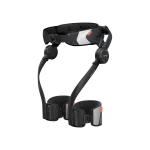
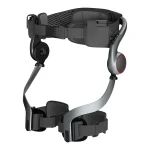
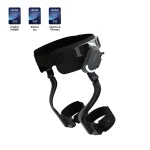
The columns repeat the manufacturers’ published specs. The Dnsys Z1 may show blanks because it plays a different game: a knee module has no walking modes or water-resistance rating to compare.
What a walking exoskeleton changes, and what it does not
Before choosing a model, the real question is whether this category of product suits you. Here are both columns, without rounding the corners.
What you gain
- Miles that cost your legs less: brands claim 20 to 40% less effort depending on model and mode, and owners describe a lighter feel at each step
- Long days on your feet that are easier to get through: the assist works with every step, not only on hills
- Hands and back free: the work happens at the hip, so your bag and clothes stay as they are
- A discreet device: the belt fits under a jacket, and only the thigh straps show
What you accept in exchange
- Real-world battery life well below the spec sheet: with the batteries empty, 3.1 to 5.7 lb stay on your body with no help
- Practical constraints: a few minutes to put on and adjust, plus motor noise and warmth at high assist
- $889 to $1,399 (checked Oct 1, 2026), and the habit of charging every day
Does the left column match your days? Then all that is left is finding the right model: the five steps below get you there in a few minutes.
How to choose: a step-by-step guide
Five questions, five tables. You can skip the text: each table reads on its own and points to a specific model.
1. Your budget
We only cover brands that publish a spec sheet and sell through a US store. Cheaper motorized belts from unbranded sellers exist; we do not cover them, because we cannot check their specs, warranty or support.
| Your budget (prices checked Oct 1, 2026) | Our pick | Why this one |
|---|---|---|
| 💵 Under $900 | Dnsys X1 | $889 for the X1 Carbon, the lowest price here, with a 900 W peak and a battery you swap in seconds (a Lite version starts at $689) |
| 💵💵 About $1,000 | Hypershell X Carbon | $999 buys two batteries and a GORE-TEX outer fabric; the X Pro S costs the same with one battery |
| 💵💵💵 $1,200 to $1,400 | Hypershell X Ultra or AstroShell Alpha 1 | The X Ultra has 1,000 W and two 30 km batteries; the Alpha 1 is $200 cheaper, with 14.9 mi (24 km) of battery in total |
2. Your miles per day
This is the criterion that sorts fastest, and the one spec sheets make most misleading: count on half the listed battery range whenever you push the assist.
| Your miles | Our pick | Why this one |
|---|---|---|
| 🔋 Under 5 miles a day | Dnsys X1 | 9.3 mi (15 km) per battery, swappable in seconds: even halved, it covers the day |
| 🔋🔋 5 to 10 miles a day | Hypershell X Carbon | Two batteries in the box, 21.7 mi (35 km) combined: swap during a break, no need to go home |
| 🔋🔋🔋 More than 10 miles a day | Hypershell X Ultra | Two 18.6 mi (30 km) batteries, 37.3 mi (60 km) combined: even halved, that is about 18 mi |
3. Where you walk
Terrain sets how much power you need. A city commute asks for almost nothing, a sloping street changes things, and a staircase is a different subject.
| Your terrain | Our pick | Why this one |
|---|---|---|
| 🏙️ City, flat sidewalks, short trips | Dnsys X1 | Flat ground does not need much power, so take the lowest price; its battery swaps without tools |
| 🌳 Parks, trails, boardwalks | Hypershell X Carbon | IP54 splash resistance and 10 modes: it copes with light rain and surfaces that change mid-walk |
| 🪜 Stairs and steep streets | Dnsys Z1 | The knee takes the downhill, and it is the only knee model in this ranking |
4. The weight you will carry
A hip exoskeleton is a load before it is a help: while the battery lasts, the math is clearly in your favor; once it is empty, only the pounds remain.
| How long you wear it | Our pick | Why this one |
|---|---|---|
| ⚖️ One to two hours at a time | Dnsys X1 | 4.9 lb (2.2 kg) with its battery, among the lightest hip models here, for shorter outings |
| ⚖️⚖️ From morning to night | Hypershell X Carbon | 5.5 lb (2.5 kg) you stop noticing while the assist lasts, and two batteries keep it going all day |
| 🦵 Nothing on the hips | Dnsys Z1 | 3.1 lb (1.4 kg) for the pair, 1.5 lb (680 g) per knee and no waist belt: for knee assist rather than hip assist |
5. Your build
A topic few people cover, and a decisive one: these devices strap onto your waist and thighs, and they do not fit every body. Brands publish different limits, so check yours before you order.
| Your situation | Our pick | Why this one |
|---|---|---|
| 📏 You want published size limits before buying | Dnsys Z1 or AstroShell Alpha 1 | The Z1 lists 4 ft 11 in to 6 ft 5 in and 88 to 269 lb; the Alpha 1 lists 4 ft 11 in to 6 ft 3 in |
| 👖 You will walk in everyday clothes | Hypershell X Carbon | A slim belt that fits under a jacket; by contrast, the thigh straps of the Dnsys X1 tend to ride up |
The five steps usually converge on one or two models. If two remain, decide on how long you will wear it: it is the criterion buyers underestimate most. For a wider view of the decision, see our guide on how to choose an exoskeleton.
Hip or knee: where to put the assist when you walk
Walking tires you in two places, for two different reasons. The hip pushes: it moves you forward, and it is what costs you miles. The knee brakes: it takes the load on every stair and every downhill. The devices in this ranking assist one or the other, never both. The Hypershell Halo is the exception, with motors at the hip and the knee.
| What wears you out | Our pick | Why this one |
|---|---|---|
| 🚶 Moving forward, keeping up the distance | Hypershell X Carbon | Hip assist pushes the thigh with every step, which is mechanically what stretches your miles |
| 🪜 Going down, braking, stairs | Dnsys Z1 | The knee takes the downhill; the Z1 works it and recovers energy on the way, at 1.5 lb (680 g) per leg |
| 🧩 Hip and knee together | Hypershell Halo | Motors at both joints, but it is a $2,299 preorder (checked Oct 1, 2026) that ships in late November 2026, so we do not rank it here |
If both speak to you, start with the hip: it covers most walking situations, and the knee is a niche need. For the full market picture, see our best exoskeleton comparison.
Mobility problems, pain, rehab: what these devices are not
Some people who search for a “walking exoskeleton” are not trying to walk farther. They are trying to walk again. This page does not answer them, and it is better to say so than to let them buy the wrong thing.
The six models above are recreation and comfort products, not medical devices. They are not prescribed, and Medicare does not cover these consumer devices. We credit them with no effect on pain, joints or rehabilitation, and we make no claim that they help with balance or prevent falls.
If your difficulty walking has a known cause (a stroke, multiple sclerosis, arthritis, recent surgery, balance problems), or if it is setting in without explanation, the first step is a doctor or a physical therapist. Only they can tell you whether a device makes sense in your situation, which one, and how to get it. Medical exoskeletons do exist: they are prescribed, used under clinical supervision, and fall under FDA rules for medical devices. We do not recommend them from a shopping site. Age alone is not the question; your health history is.
| Your situation | Where to go | Why |
|---|---|---|
| 🚶 You walk well and want to go farther | This page | The six models in the ranking are made for exactly that, and for nothing else |
| 👵 You are shopping for a parent or an older adult | Our walking exoskeleton guide | Written with older walkers in mind: safety, bulk, and what to settle with a doctor first |
| 🩺 A condition or pain is involved | A doctor or physical therapist | No product on this page answers it, and nothing here replaces medical advice |
How much does a walking exoskeleton cost?
All six are priced in US dollars on the brands’ stores. The cheapest model here is the Dnsys X1 Carbon, and a Lite version starts lower. Much cheaper motorized belts exist, mostly from unbranded sellers; we do not cover them, because we cannot check their specs, warranty or support.
| Price checked Oct 1, 2026 | The model | What the price buys |
|---|---|---|
| 💵 $889 | Dnsys X1 (Carbon version) | 900 W peak and a swappable battery: the lowest price in this comparison |
| 💵 $999 | Hypershell X Carbon | 800 W and two batteries: the best value for daily walking |
| 💵 $999 | Hypershell X Pro S | The newest Hypershell series, with one battery |
| 💵 $1,199 | AstroShell Alpha 1 | A 1,000 W peak with both batteries on board (price on the AstroShell store) |
| 💵 $1,299 | Dnsys Z1 | Knee assist and energy recovery on downhills, at 1.5 lb (680 g) per leg |
| 💵 $1,399 | Hypershell X Ultra | 1,000 W and two 30 km batteries: our top pick for walking |
Prices checked on Oct 1, 2026 on the brands’ US stores, given as a guide only: they change often, so check before you order. Hypershell ships free from a US warehouse (about 8 business days in the contiguous US), and Dnsys ships from a Los Angeles warehouse in 3 to 7 business days. For the overview by type of device, our exoskeleton price guide covers each family.
A word on passive models, the elastic belts and supports that sell for far less: they contain no motor and do not assist walking. They are different products for different needs, and it would be dishonest to compare them with the six devices on this page.
Where to buy, and what to check before you order
Twenty minutes of assisted walking would teach you more than this whole page, but we cannot point you to a try-on or rental program in the US that we have verified. Until you can try one, your fitting room is the spec sheet: compare your height, weight and waist with each brand’s size limits before you order.
Where you buy changes shipping time, warranty and support as much as it changes the price. Hypershell ships from a US warehouse, Dnsys from Los Angeles, and AstroShell is a Florida brand sold on its own store and on Amazon. Read each brand’s return and warranty terms on its page before you pay; we do not list them here because they change. And if your miles are on trails rather than sidewalks, our best hiking exoskeleton comparison is the one you need.
Frequently asked questions
Does a walking exoskeleton make you lose muscle?
No published study lets us say yes or no: these devices are too new for long-term follow-up. If the question worries you for a health reason, ask a doctor or physical therapist rather than a comparison site.
Can you see it under your clothes?
Partly. The belt is slim and fits under a jacket or coat without drawing attention. The thigh straps sit over your clothes and do show: it is the detail that surprises people most the first time. If you walk in everyday clothes, note that the thigh straps of the Dnsys X1 tend to ride up over the hours.
Can you take one on a plane, a bus or a train?
On a bus or a train, no problem: the device is worn or fits in a bag. On a plane, the lithium battery decides. The X Carbon’s batteries are 72 Wh, which is under the 100 Wh limit airlines generally accept in the cabin, and lithium batteries travel in the cabin, never in checked bags. Check your model’s battery capacity and your airline’s rules before you leave.
Does Medicare or insurance cover a walking exoskeleton?
No. Medicare does not cover these consumer devices, and none of the models on this page is a medical device or is prescribed. For a private plan, ask your insurer directly: we cannot speak for it. If your need is medical, the route is entirely different and starts with a visit: a doctor or physical therapist can tell you what exists and how to get it.
Does it help on flat ground, or only uphill?
Both, but differently. Uphill, the difference is immediate. On flat ground it is subtler and shows up in duration: the assist works with every step, so fatigue arrives later rather than weaker. Brands claim 20 to 40% less effort depending on model and mode; take those figures for what they are, brand claims, but the lighter feel is not in dispute.
I am over 50 with some joint aches. Can I use one?
That is a question for your doctor or physical therapist, not for a comparison site. These are recreation products, and we make no claim about pain, arthritis or joints. Bring the spec sheet of the model you are considering to the appointment.

The Editorial Team
Comparative analysis of consumer exoskeletons
How we review
- Cross-checked French and English sources: published independent tests and feedback from real users.
- Verified specifications from several sources, with data normalized for easy comparison.
- No measurements of our own: manufacturer values are flagged as such.
- Prices and availability tracked regularly, rankings continuously updated.