A walking exoskeleton is a wearable frame with small motors at the hips or knees that give each step a gentle push, so walking takes less muscle effort. It is for people who already walk on their own and want everyday walks to feel easier or go farther. Our top pick for walking is the Hypershell X Ultra. The X Carbon is the smart step down, and the Dnsys Z1 is the only dedicated knee model.
Want the full ranking? See our best exoskeleton for walking guide. These are consumer recreation products, not medical devices, so if a health condition affects how you walk, talk to a doctor or physical therapist first.
1 to 4 products · Updated 10/02/2026
-
1. Our top pick
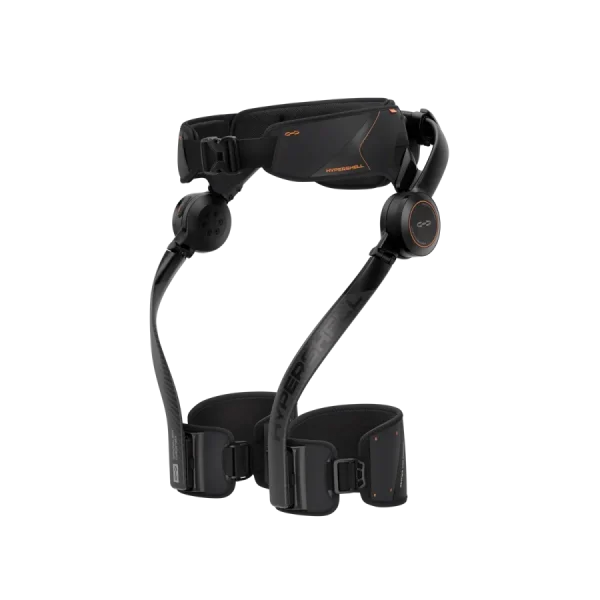
Hypershell X Ultra
- 1,000 W and 12 modes
- Two 18.6-mile batteries in the box
- SGS-certified carbon fiber frame
1,000 W and two 18.6-mile batteries for $600 less than the X Ultra S, which has the same power and range. It pays off on steep, repeated climbs and heavy loads; for lighter needs, the X Carbon costs $400 less.Our score Our score breakdownAssist power9.5Real-world range10.0Weight and comfort9.0Value for money10.0Warranty and support9.5 -
2. Two batteries under $1,000
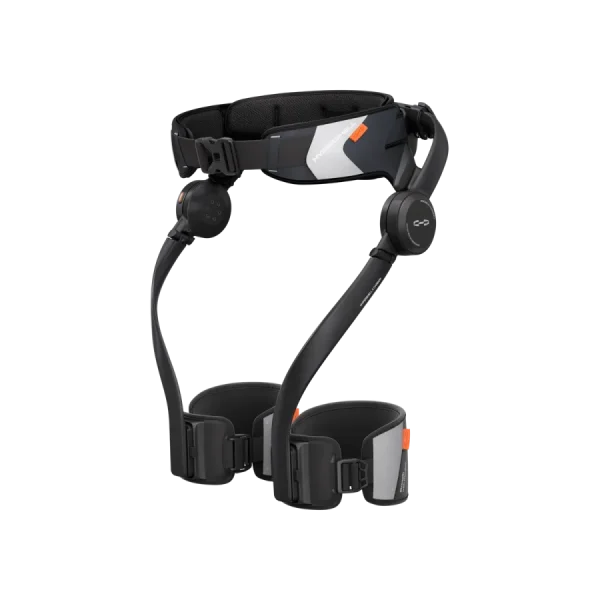
Hypershell X Carbon
- Two batteries for the price of the one-battery X Pro S
- GORE-TEX outer fabric and titanium hip levers
- Free shipping from a US warehouse
Two batteries, a carbon frame and GORE-TEX fabric for the price of the one-battery X Pro S. The X Ultra adds 1,000 W and 37.3 miles of range for $400 more, so it stays our top pick; the X Carbon is the smart step below it.Our score Our score breakdownAssist power9.0Real-world range8.5Weight and comfort9.0Value for money9.0Warranty and support9.5 -
3. The knee option
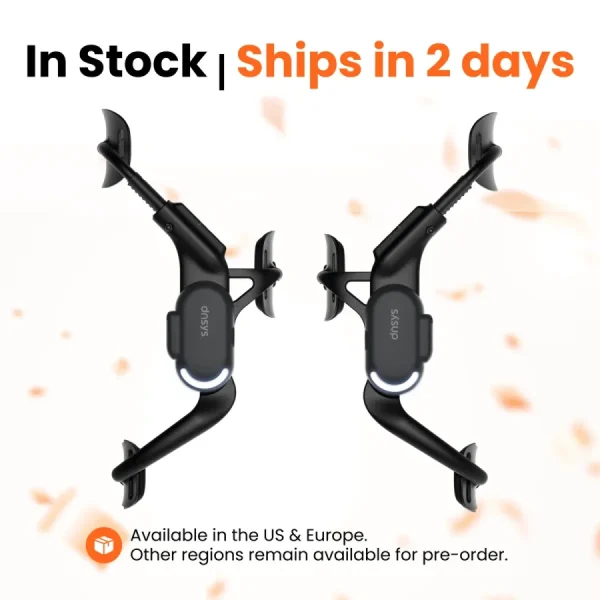
Dnsys Z1
- Built for the knee
- Energy recovery on descents
- Size range published in black and white
The most distinctive product in our comparison: where the others assist the hip, the Z1 assists the knee and recovers energy on descents. It is the only dedicated knee unit here, but the standard version has one battery and adds no push uphill.Our score Our score breakdownAssist power9.0Real-world range7.5Weight and comfort10.0Value for money8.5Warranty and support7.0 -
4. Cheapest 1,000 W
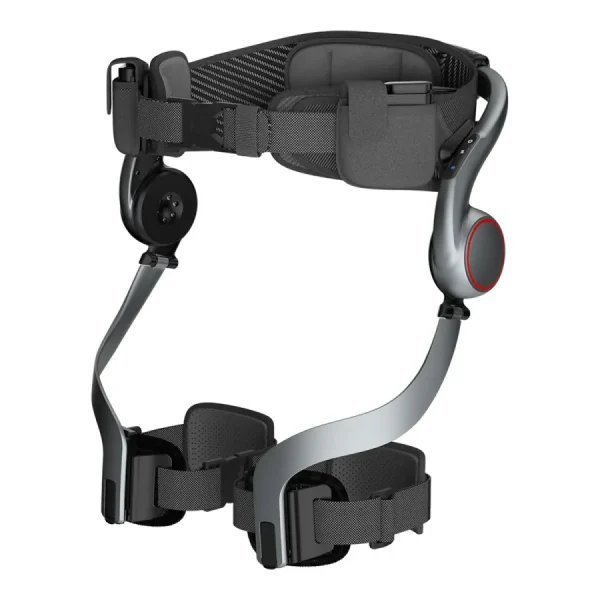
AstroShell Alpha 1
- 1,000 W peak at the lowest price
- Two batteries in the box
- 5.3 lb with both batteries on board
With 1,000 W peak, two batteries and 5.3 lb, the Alpha 1 brings top-tier power at a mid-range price. Main drawback: 14.9 miles in total, spare battery included; the X Ultra goes much further for $200 more.Our score Our score breakdownAssist power9.5Real-world range8.0Weight and comfort9.0Value for money8.0Warranty and support7.0
Editorial and user score scale: from < 5 to 10 · amber is reserved for the user score
Who a walking exoskeleton is for
Think of it as a tailwind for your legs: the motors share the effort, and you still do the walking.
A good fit if you
- Already walk on your own and want the same walks to cost less effort
- Tire early on longer walks, hills or stairs and want to keep going
- Are comfortable wearing 3 to 6 lb at the hips or knees
- Do not mind charging a battery and setting the assist level in a phone app
Look elsewhere first if you
- Have trouble with balance or fall often: a cane, a walker or a physical therapist comes first
- Have a condition that affects your walking and have not talked to a doctor yet
- Want a mobility aid: these models assist effort, they do not hold you up
How it helps
Most walking exoskeletons assist the hips. Motors at the hip joints push the thigh forward and back with each stride, and sensors time that push to your movement. You set the assist level in an app, from light to strong. The aim is less muscle effort per step. Brands quote percentage savings, but those figures come from the makers and we cannot check them, so read them as claims.
A knee model works differently. The Dnsys Z1 weighs 3.1 lb (1.4 kg) for the pair, guides the knee and recovers energy on descents (a kinetic energy recovery system, or KERS). It adds no push uphill, so climbing power is a job for a hip model.
If your knee is the reason you are looking, see a doctor or physical therapist first. A knee exoskeleton does not treat a knee problem.
What it is not
What to check before you choose
Four checks narrow the field quickly: weight, range, price and power. Here is the model we would look at first for each.
| What matters most | Our pick | Why this one |
|---|---|---|
| ⚖️ Weight | Dnsys Z1 | 3.1 lb for the pair of knee units, the lightest product in our walking ranking |
| 🔋 Range | Hypershell X Ultra | Two 18.6-mile batteries in the box, 37.3 miles combined |
| 💵 Price | Hypershell X Carbon | Two batteries and a carbon fiber frame for under $1,000 |
| ⚡ Power | AstroShell Alpha 1 | 1,000 W peak at the lowest price of any 1,000 W model in our comparison |
Prices are US store prices checked on Oct 1, 2026, and they change often. Ready to compare? Read the reviews of the Hypershell X Ultra, X Carbon, Dnsys Z1 and AstroShell Alpha 1.
Walking exoskeleton questions, answered
Is a walking exoskeleton a medical device?
No. The models on this page are consumer recreation products. They reduce the effort of walking; they do not treat a condition, hold your balance or prevent falls.
Can I use one with a knee or hip problem?
Ask your doctor or physical therapist first. We cannot tell you whether a product is right for your joint. If you have had a joint replacement, ask your surgeon, because these frames push on the hip and thigh.
How much does a walking exoskeleton cost?
The four models above cost $999 to $1,399 in US stores on Oct 1, 2026: the X Carbon $999, the AstroShell Alpha 1 $1,199, the Dnsys Z1 $1,299 and the X Ultra $1,399. Prices change often, so check the review before you buy.

The Editorial Team
Independent comparison of consumer exoskeletons
How we review
- Cross-checked French and English sources: published independent tests and feedback from real users.
- Verified specifications from several sources, with data normalized for easy comparison.
- No measurements of our own: manufacturer values are flagged as such.
- Prices and availability tracked regularly, rankings continuously updated.